Thanksgiving
Most of us use the terms ‘thankful’, ‘grateful’, and ‘appreciate’ interchangeably. I later went back to look up the two terms, and what I found was a whole new approach to gratitude.
Read More
Get into Life
Most of us use the terms ‘thankful’, ‘grateful’, and ‘appreciate’ interchangeably. I later went back to look up the two terms, and what I found was a whole new approach to gratitude.
Read More“Can you believe the worst year of our marriage is almost over?” Oh, the romance of a one year anniversary.
Read More
Call me crazy, but I’ve always wanted to be ‘in my thirties’. I didn't think I could actually be considered 'classy' until I was out of my twenties. As if once my third decade on Earth hit, my title would suddenly graduate from the endearing 'Young Lady' to the prestigious, 'Woman'. That is obviously my 12-year-old self speaking, but the thought took root somewhere in the depths of me. Today, on this my entry into that mystical third decade, I’m beginning to see some flaws in my logic (winky-face Emoji). I don’t feel the way I envisioned those classy, refined, thirty-something women feeling. I feel immature. The cannon is still a little loose and decisions at times still questionable. I guess I'd hoped to be all grounded, not like listening to the new Taylor Swift album on repeat and shopping at Forever 21 (sometimes simultaneously) and using the words ‘like’ and ‘Emoji’ so much in daily life.
Along with those expectations, however, comes the bonus of growing up: I don’t mind. I don’t mind that I still have a long way to go before ‘sophisticated’ and ‘graceful’ are synonymous with my name. Tell my 22-year-old self that this is what 30-year-old self would say? Bam - horror and disappointment at the thought of still being a work-in-progress. But for today’s me? It’s all good.
Okay, so I haven’t found my ‘life’s work’ or know exactly where I’d like the next five years to go, but I am more comfortable with that uncertainty than ever. With that comfort I have found more clarity and drive to achieve things of which 22-year-old me could only dream. The weight of needing to have it all figured out has proven to be a burden I am happy to leave behind.
So to kick-off the new decade, in all my non-wisdom and tween-at-heart sensibilities, I’ve given myself the challenge of writing 30 lessons I’ve learned in 30 years on this planet. In one(ish) sentence each. That's hard for me, people! Getting old is already a challenge.
Though far from groundbreaking, these are some of the tried-and-true basics that get me through the day.
Best part about this is, I only have to learn one thing a year from here on out!
*Adapted from Dr. Laura
**Brigham Young, paraphrased
**Heard the acronym from John Bytheway
Today, my testimony is my most precious possession. I would not be living a wholehearted life without it, and things in the day-to-day would be incredibly different.
My testimony is only so valuable to me now because I earned it.
Read More
Hulu has appropriately stereotyped me through the Big Brother that watches my clicks around the Internet, and loves to show me commercials for cleaning products. Cascade must have the deepest pockets, as two of their spots have taken over my TV watching experience. I’ll outline one:
Husband is emptying dishwasher. Wife looks at dish as he takes it out, it's still dirty from lower-grade detergent.
Husband, proudly, takes fingernail to dish, scrapes stuck food: Clean, see?
Wife [with furrowed brow and condescending tone]: That’s not clean!
Husband: [surprised]
*Cascade to the rescue!*
After correctly Cascading the dishes, Husband takes out clean dish, excitedly rubs finger across it making a squeaky clean sound.
Wife [with furrowed brow and condescending tone]: Don’t do that.
Husband: [stops squeaking]
We’ve seen it a thousand times. Husband is a dumb, fumbling slob at the mercy of his overbearing, all-knowing wife. Housework isn’t his only challenge! So is running the grill, dealing with the runaway lawnmower, making wise decisions...
(Have to insert this Discover Card commercial: Customer Service Agent says to female customer, "So is your husband out of the doghouse yet?" Woman [adamantly]: "No! Last week he went out for milk and came back with a puppy!" [Husband in the background, begging puppy not to pee on carpet as he carries it outside])
All of these basic tasks exceed the grasp of these poor men, otherwise known as Stupid Husbands.
There are as many stereotypes and forms of discrimination thrown at people as there are humans on the planet. I don’t intend to comprehensively discuss gender stereotypes in a way that would please all. For simplicity’s sake, today I intend to focus on just one.
My reason for selecting this one is simple: it’s the only form of discrimination I see on a regular basis, in the homes and lives of people all around me, and one that is not only completely accepted, but encouraged.
Sadly, regardless of whether the media’s portrayal of this is life-imitating-art or the other way around, in real life, Stupid-Husband Syndrome is responsible for the tedious and painful breakdown of many good relationships. The message has seeped into and out of our homes and become commonplace. Some are more susceptible than others, but few and far between are the homes where no trace of SHS is detected.
The rise of this disease has bothered me for years. It has kept me from sitcoms from the likes of Everybody Loves Raymond or King of Queens. Not only are the husbands portrayed as irresponsible goofballs in need of babysitting, but the wives are written as disciplinarian, naggy eye-rollers. The ones that without whom, the place would go up in flames due to the carelessness and ignorance of the man.
The basic feeling is that the man and woman are at war in sibling rivalry, not teammates in a loving, romantic relationship.
This concept was finally made top-of-mind when I received a onesie for my baby as a gift. It said, 'Daddy knows a lot, but Mommy knows EVERYTHING!'.
This pretty much summed it up. The attitude is so pervasive that it’s now cute! I’m supposed to raise my child to believe that mom runs the place and silly ol' dad is just along for the ride. I love Phil Dunfee as much as the next gal, but it was getting old.
And so my research began, knowing there had to be others who had already covered this. I computer-searched “dumb husband commercials” and was flooded with examples. It was worse than I thought. I’m obviously late to the party.
But what about real-life examples? Google 'Stupid Husband', and blogs, Facebook groups, Twitter accounts entitled, 'Stupid Things My Husband Does', 'Stupid Stuff My Husband Says', MyStupidHusbandClub.com, and many more pop up.
Then, the comments! Comment after comment from women commiserating about how they have to 'do everything' for their clueless husband, they have to 'check' his work, or that he is 'incapable' of completing basic tasks without their ever-watchful eye.
The most depressing part was the tone. Pure disdain and disgust for the person they vowed to cherish for life. I felt for all the members of a household that was so devoid of admiration and respect. Some hit close to home, as I'd listened-in on dozens of conversations just like these over the years at office water coolers, or inside homes as a live-in nanny. But at the time I hadn't yet realized how destructive the mentality could be until I was in a marriage of my own.
My favorite finding was a site called Dumb White Husband. It’s exactly what I was after. They have a free e-book about a Dumb White Husband going to the grocery store that simultaneously made me laugh out loud and bummed me out. Here’s DWH’s pithy description of who the “Dumb White Husband” is:
John is a dumb white husband. That is to say that he loves and cares for his family, is successful in his career, popular around the neighborhood, can dress himself (often without injury) and is capable of reasonable thought. Demographically, however, he functions like a 4-year-old who can’t quite master the intricacies of the potty.
It isn’t his fault. He studied hard and got a college degree. He works hard and earns a comfortable living. But, like all other dumb white husbands, he leads a dual life; competent member of society by day, helpless male by night, weekends and holidays.
He has served for years as the nervous legal department-approved foil of commercials, TV and movies...Through a combination of wit, cunning, unparalleled stubbornness and prat falls, the dumb white husband remains the only character corporate America feels comfortable featuring as the butt of their jokes.
Funny, right? So why does it matter? It's just jokes.
If that were true, people wouldn't be getting divorced over the issue. You find this all the time in real life settings (to varying degrees, obviously), and it’s dangerous to a marriage.
If a woman sees her husband as idiotic and incapable (or put more 'lovingly': absentminded and silly), she is naturally more likely to pick up the slack. That’s fair; the household has to run somehow. But over time, the assumption that he is another child to look after rather than someone she can lean on and respect, is going to fuel a whole lot of resentment when she begins feeling alone in the marriage.
And he, who married to have a partner, someone who loved and appreciated him, will begin to feel isolated as well. As his autonomy leaves, and the respect from his one-and-only wanes, the helplessness sets in.
But what if instead, she chose to see him as a respectable equal, someone she could rely on for support and real partnership? What if, instead of taking on the role as the controller, or putting herself in charge of 'cleaning up the mess' he made, she trusted him to do his part? What if, when he made a mistake (as she often does), she simply let it go without criticism? What if she asked for his opinion on things, and then considered it without argument or dismissal?
He’s capable of going to work, most likely lived a few years on his own prior to meeting his wife, and doesn't usually end up in the gutter after work, so why does he need to be watched over as he loads the dishwasher or plays with the kids?
When I've had this conversation with fellow women, some examples of responses are:
She might be right. After years of being taught that what he does on his own is incorrect, he sees it’s easier to shut off, sit back, and let her take care of it. She may have demonstrated that she was going to anyway. After all, whenever he gives a suggestion she usually dismisses it (sometimes even nicely), or if he defends himself it starts a war. Rather than expend the energy when it isn’t useful, he follows the rules. But little by little, the wedge is driven.
She begins to talk the issues to death, he stops talking altogether*. She gets more and more frustrated, he gets more and more distant.
There is a lot of research out there on cheating. Obviously, cheating is wrong, under any circumstances. But so is drunk driving and we don’t say, “Well, drunk driving is wrong, so I’m not going to wear my seatbelt when I drive late at night. They shouldn’t be on the roads anyway.”
No one is to blame for cheating than the cheater him/herself. But that’s no reason not to ‘affair-proof’ your marriage if there are ways to make affairs less likely. Look at it as adding more love to the marriage, something we all want anyway.
Did you know that most times, the male cheater isn’t doing it for sex? Did you know, that most times, the woman he cheats with is not more attractive or younger than his wife?
Study after study has shown that the number one reason for infidelity is feeling unappreciated. Sure, there are people with low character who philander and cheat with no remorse. This is not your average affair though. Usually when a man cheats, he is feeling emotionally disconnected, unappreciated, and unneeded by his wife. Without question, the new person is making him feel admired, appreciated, and adored. I would venture to guess the same is true for women who cheat.
"I have steak at home. Why should I go out for a hamburger?" -Paul Newman comparing his lady to meat... maybe not the best imagery. But, it makes the point.
What’s the cure? I can only cite ideas from my favorite marital experts, but it begins with something very simple. I believe very strongly in the sentiment expressed in my previous post about being kind. I have a hard enough time just doing that all the time, so that’s pretty much where I keep my efforts.
To paraphrase Dr. Laura, the perfect marriage is one where every day, both people wake up and think, “What can I do TODAY to make my spouse happy they are alive, and married to me?”
People tend to rise or sink to the level at which they are treated. If you treat him like a child, he’s more likely to need you to take care of him, or at least act like it. If you treat him like a grown man, and assume he’s ‘got this’, there is a good chance (if you married a good person) that he will do whatever it takes prove you right.
As for extracting the Stupid-Husband Syndrome that in some marriages has become deeply ingrained in the dynamics of the household, this may take some difficult self-reflection to admit your part. It may take apologies, from both husband and wife. Both have perpetuated the idea that the woman is mean and obnoxious and the man is clueless and incapable. It may take therapy to uncover where you each got the impression that men fill this role and women fill that one, and learn how to restructure a more healthy life together. It will take learning new ways to talk -- expulsion of the disrespectful, condescending, parenting tone.
Above all it takes husband and wife owning their part and gaining a desire to build the beautiful marriage they both deserve. First things first: Let’s start with not worrying so much about how the spouse uses the dishwasher.
*There are much better resources than the links I provided. The best help is often in books, not websites. So if you are interested in the books that best cover these topics, just ask.
Just be kind.
I’ll probably lose some of you here. But that’s because it seems so obvious that it is brushed over almost chronically to the demise of many could-be-great relationships.
Read More
I had never prayed for a flight to go well, beyond asking for safety and peaceful arrival. So it’s funny now, thinking back on the disaster that day was, to know that it was also the day I had prayed a lot for things to go smoothly. We were so excited to be on our way to settling in, and this measly little flight was the final hurdle. Well, the day went well, in one of those hard kind of ways. It provided an excellent opportunity to realize just how much help we need even when the best laid plans...
Throughout the day we saw the hand of God appear in small, but crucial-to-us ways. He knew what we needed so as not to lose our minds, but allowed just enough chaos and uncertainty to show us how much we need Him and His children.
Disclaimer: the so-called “disaster” that was this day is nothing compared to real-people problems. We are real people, but these are not real-people problems. They are what you might call, “First World Problems”, or even "White People Problems”, if you will. All the same, the relief one feels in being rescued when one’s head is about to explode is a feeling unmatched. And I intend to honor my lightweight suffering with a blog post.
Just one more step. We had been to and fro all summer, visiting family we wouldn't see for a long time, using up a bunch of frequent flyer points we earned paying for a baby. I can’t quite put into words the deep excitement I had at the thought that we would be moving into one place and staying there for up to three years. I had skipped right over the travel portion in my mind, and was already imagining the peaceful unpacking process ahead. I wasn't sure how Clayton would fare on such a long flight, but I was willing to endure a lot of airplane baby screaming to get to our new home.
Jon and I have a sickeningly over-the-top sense of foresight. You don't want to be near us when we are preparing for stuff. Weeks leading up to an event our conversations often start with, “I thought of something else we should plan in case ABC occurs on the off-chance of XYZ.” We had shipped some of our belongings, but made sure to fly with us everything we would need for one or two nights in an empty apartment.
The plan: Fly from Portland to Boston, land at 5 PM. Pick up rental car for five hours (can’t keep car overnight, nowhere to park). Put all nine pieces of luggage and baby gear into car. Drive to Target, buy air mattress and food. Go to apartment, set up perfectly planned overnight: crib, towels, sheets, toilet paper, shower curtain, paper goods. Return rental car by 11 PM. Come home, sleep, live happily ever after.
Reality: Breathlessly arriving late at the gate for a 6 AM flight (first foresight fail), Jon’s crushed glasses in-hand, we find the door to the plane closed. They kindly let us in (first miracle), and with it being a Southwest flight, we get to “select” the last two seats. Second miracle: two seats are together. Less miraculous: last row. Along the way, Jon obtains two Band-aids and a paperclip to repair his poor glasses. Thank you, all-powerful flight attendants.
Sitting straight up and playing hot potato with the baby, we make it four hours before beginning the countdown to a much-needed layover in Chicago. First major change in plans: in a holding pattern over Chicago, our plane running out of fuel, we land in Rockport. Rockport isn’t Chicago. The guy next to us who had mercifully been asleep the entire flight, wakes up, looks around, and says, “Wait, we’re not in Chicago?”
Enter the baby squeals…Clayton felt as ripped off as everyone else. After refueling and flying back to Chicago, two hours later than planned, we find a chaotic airport that had been closed due to a fast and furious rain storm. Needless to say, we weren’t the only ones with a missed connection.
Running on empty with only time to grab a cold Big Mac (I told you, #firstworldproblems), we jump on the next plane out. Now arriving in Boston three hours later than planned, we need to get to Target (#whitepeopleproblems)! Second problem, our gate-checked stroller is nowhere to be found. Crisis averted: Solly Baby Wrap to the rescue! Clayton kindly sits in it and enjoys the sights and smells of lovely Logan Airport. As I’m waiting on the curb for Jon to bring loads of stuff out, he informs me we have no bags.
You saw this coming. No bags, no stroller, no car seat, no crib. The other good news? No hotels, too late for car rental, and we have no indication of when our things will arrive, or for that matter, even where they are.
Throughout all of this, it was hard to miss the absolute peace that surrounded Clayton. Any mom knows that the moment a baby starts crying, her inner stress is multiplied by infinity. It can be hard to focus on anything else. Although he had barely napped, was woken up early to get on a plane, and had been hastily toted around all day, he didn’t make a peep. Here he was, up past his bedtime in a busy airport lying calmly against my chest, seeming to know it would all work out just fine. Mercy.
After gathering our carry-on’s and meeting Jon at the baggage claim office, I met Bret. During their time together in line, Jon learned that Bret works with a non-profit Christian organization that helps college kids find Christ-centered community. Right away I could tell Bret was a real Christian. The kind who actually behaves as if he loves Jesus. Had Jon not told me what Bret’s work was, I still would have assumed he was somehow very close with God strictly due to his countenance. He was a bright spot in an otherwise bleak situation. As Jon and I stepped aside to discuss our next steps (there weren’t many options), Bret approached us and said, “It seems like you guys are a little stuck. My wife went home to drop off our son, but she is coming back to pick me up. Can we give you a ride somewhere?”
I hate putting people out. And I have a problem with always assuming I am putting people out. I would rather spend more, expend more energy, or sacrifice more (stupidly) than allow someone to go out of their way for me. Luckily, Bret had a lot of experience with helping people. He demonstrated two key factors (in my book) to reaching out: He was specific, and he phrased the offer in a way that showed he was genuinely interested in helping.
He didn’t say, “Do you need some help? Let me know if there's anything we can do.” He asked us if he could do something for us. We're nice people and wouldn’t want to turn someone down if we could help them do what they wanted to do. If someone asks if we need something, it's, We're fine, thanks. But if they ask if they can have something from us (the opportunity to help us), for some reason it is easier to oblige.
Secondly, offering a specific help rather than a general, “Let me know!” shows an added level of sincerity, I think. Even if what they offer isn’t exactly what you want or need, it opens the door to feeling comfortable to ask for what would help most. This seems insignificant, but I noticed that the way he asked had a lot to do with my acceptance of the help.
I wanted to take him up on it, but we had no car seat. I clumsily told Bret of our, what now seemed outrageous, plan to go to the store and our apartment that night. But Target would be closed, so going to our apartment was becoming less of an option as well. No problem for Bret though, his wife could help! “In fact, why don’t you just talk to her for a minute and tell her what you need?”
Before I had the chance to object, I’m on the phone with Corri who wastes no time in letting me know how she is prepared to help. Immediately I hear, “I have a car seat and a Pack’n’Play, what else might you need?” She showed up with that stuff plus two air mattresses, sheets, blankets, towels, a stroller (“In case you need to go out in the morning...”), and a high chair booster, just in case.
In a refreshingly upbeat mood, unexpected from people who had been traveling as long as they had that day, they drove us out of their way and into Cambridge. I felt the excitement that had been squandered by the airport return as we shared in the thrill of seeing the beautiful town at night. As the five of us walked into our new place for the first time, it was a much more ceremonious and joyful event having new friends with us, particularly after such a ridiculous day.
For our family and friends who felt lonely for us knowing we were moving out here all on our own with no family nearby, you can take comfort in knowing we had surrogates for you. They shared in the novelty and significance of walking into a new home and starting a whole new life. They may have been more excited for us than we were. They had already planned to introduce us to some friends they had in our town, and it seemed we all knew we would see each other again.
I have the feeling this is how it is for these guys everywhere they go, but that doesn’t diminish the impact they made on us. Being assisted in a time of real need is an experience that’s never forgotten by the recipient. To the giver, it may seem routine or like no big deal. But to two kids in a new city, with a new baby, starting a new life, it was the difference between starting with hope on what we were about to embark, and feeling like we were left alone to figure it out.
That first night, I got the distinct impression that these years in Cambridge would be a time when the Lord would be close by, but that He would be so through receptive “neighbors”. This is often the case, but somehow I’ve always been in a position to resist it. It is much more difficult now, thankfully, and we have already experienced several more ways in which we need others in order to thrive here. Clearly it’s finally time to break out of my independent mindset and allow His love to come more fully into my life by being open to the kindness of strangers.
It is cool to see how in doing so, my desire, ability, and opportunity to serve others grows. It takes vulnerability to accept help, and connection can’t be had without exposing yourself. Service without connection and love is missing the mark. I’m learning that accepting my own weakness is the first step to accepting others in their weakness.
I learned this week about another way in which refusing to accept help can hinder my ability to become more like Christ.
David A Bednar from his talk "The Character of Christ" (worth a read) :
Perhaps the greatest indicator of character is the capacity to recognize and appropriately respond to other people who are experiencing the very challenge or adversity that is most immediately and forcefully pressing upon us. Character is revealed, for example, in the power to discern the suffering of other people when we ourselves are suffering; in the ability to detect the hunger of others when we are hungry; and in the power to reach out and extend compassion for the spiritual agony of others when we are in the midst of our own spiritual distress. Thus, character is demonstrated by looking and reaching outward when the natural and instinctive response is to be self-absorbed and turn inward. If such a capacity is indeed the ultimate criterion of moral character, then the Savior of the world is the perfect example of such a consistent and charitable character.
Although this is referring to a different type of being “closed-off”, reading it this week helped me realize that by “taking care of myself” (thinking I am saving everyone hassle), I am then more likely to be looking inward, focusing on my own problems and less likely to notice others. When I think of the most genuinely Christlike people I know, their quickness to respond to the needs of others with no thought of themselves is the quality that stands out most. What beautiful character they share. And how thankful I am that they are willing to share their goodness with me.
Here’s to new beginnings and the chance to meet many more wonderful and interesting people through being just a little more needy. Just kidding. But, seriously.

How Did I Get Here?
I think about this question a lot. These days, I’m thinking of it in terms of geography and the finale of an almost-two-year-long trek to a new city. Other times, however, it’s more, “How did I EVER get here?” in terms of marriage, motherhood, and approaching 30. Weren't we 19 barely three years ago?
I had always hoped to someday be where I am now. It didn’t matter when, I just wanted to get here sometime. Maybe that’s why it’s still somewhat strange to sit still and realize that I’m finally here. This is it, as they say. But it’s not really it, as in the end of the end, the top of the top. It’s just one it. But rather than looking to all of the other its I hope to reach in life, sometimes it's good for me to reflect on how I got to the current here.
When I was a teenager in a relatively small town, my older sister got married young and became a mother. The goal. A few years later, she was unhappy. I was at the local college, not sure what I wanted to study, and quickly losing my personally prized status as a straight-A student. I didn’t really care about school anymore. I wasn't sure what I wanted to study, and I was getting restless being back in school so soon. In addition, as someone who went on few dates in high school and had never had a boyfriend, my job at the grocery store near campus boosted my visibility and the dating opportunities came.
My sister warned me not to get married young. Some friends of mine were prepping to take the plunge. I got it in my head that if I didn’t leave for awhile, at the rate I was going I would end up married at 20, living in my hometown, someday resenting my poor husband for my lack of life experiences on my own. Or so my 19-year-old-“sky is falling”-self reasoned, so I left. Thus began the gypsy lifestyle that persisted for the next ten years.
About five years into it I was tired of wandering, realizing that there is something to be said for consistency in some form or another.
I wanted to be somewhere I could invest my time (relationship-wise), not just spend it. When I asked him what he liked most about being married, my dad said, “One time my dad gave me his credit card when I went on a road trip up the coast of California. It was a sad trip. There were gorgeous sunsets, beautiful scenery, and I could spend whatever I wanted, but I was alone. Being married is all about being able to point to the sunset and say, ‘Now isn’t that beautiful?’”
Living for myself was growing tiresome, and not being able to share my adventures began to take the fun out of them.
Dating provides so many opportunities to see, do, and try fun, new, incredible things. But when I began to look back on many of my favorite memories, I realized many were had with people I would never see again. They got married, or once I was in a relationship, a close friendship with them would be inappropriate. Those memories had to be locked away to some degree, whereas marriage is about keeping shared memories front and center, relishing them, continually polishing them to keep the fire alive.
Being alone with oneself is a wonderful thing. I have great memories of solo road trips, solitary reflective moments, creative projects where I lost track of time for hours. I still seek these times. I don’t regret any time on my own, nor am I saying marriage is the only way to invest in a long term relationship (friends, family, coworkers, those we serve…). I know I handle marriage better than I would have due to the things I learned about myself in those years. But I reached a point where, for me, sharing my whole life was my greatest desire.
There is a difference between feeling lonely and feeling desperate. Loneliness is a normal human emotion. Desperation often comes from a sense of unworthiness. Too often it's assumed that if you actively seek marriage, then you must be desperate. There is also a difference between feeling lonely for company and feeling like you want a home of your own. Somewhere to stay, somewhere to build. My parent’s home was a constant hub, a place where I felt belonging and love. But it wasn’t mine to build; it wasn’t where I could stay and grow.
So, I worked at dating. I got very deliberate, and put my partners through the wringer. I created a lot of social discomfort by skipping small talk and cutting to the chase on second and third dates (sometimes sooner). I narrowed down the enormous list that was unconsciously floating around in my head and chose THE three things I needed in a man. If he had those, I stayed (barring any red flags, obviously). No allowing the list to grow as time went on. If I found the three things waning, I left. No hanging on for lack of anything better to do.
I quit using dating as my entire social life and something fun to do on Friday night, and began using it for what it was designed to be: a way to select a life partner. Sometimes this approach worked, sometimes I had to scale it back. But I figured that the type of guy who would want to be with me forever would probably be able to handle my unconventional ways.
Years later, I was finally able to choose Jon. It was no whirlwind, and it didn't just happen. He was the type of man I had set my sights on, sifted through the masses for. He met the three criteria (and plenty of the ones I thought I had to let go of years before), as well as the final criteria of liking me back. We both had qualities others had turned away from. We both had many shortcomings. But we had the same end-goal and the same vision of what it would take to reach it.
We didn’t date long, but we packed in a good two years' worth of discussion, arguments, and discoveries in our short courtship. By this time in our lives, we had both laser-focused on the types of things we needed in a mate, so we cut right to finding out if we were a match (or at least I did).
It wasn’t easy though; as a recovering serial dater who had always kept my distance emotionally, I would actually vomit on our dates from the anxiety of knowing this one was real. Jon jokes that it was the sight of his face that did it; but I know it was because I was having to open my heart for real. This is what I had been seeking, I knew it was right, but I also knew deep down I had to then give of myself and leave the life I was used to.
Sometimes we think we want something so badly, but when faced with the reality that our lives will actually change in a huge way, the discomfort in that is much scarier than missing out on what we stand to gain, so we remain stuck. I knew I had to reveal the deepest parts of myself to someone who deserved it, and that freaked me out. How he managed to stick around through all of that, I’ll never know.
In the darker times of my single life when things weren’t working out how I hoped, I had this recurring image that I would visualize of my future husband, our children, and me sitting in a living room in front of a fireplace. In that image I would realize, This is why. This is why I had to go through those difficult times, because this is where I was heading.
This scene has played out many times in my current life. Although, it’s not in a perfect living room with a perfect fireplace in it. Many times it’s on the go as we run from here to there trying to get our “real life” set up. Sometimes it’s in a 600-square-foot apartment feeling my first baby kick, knowing we will move three times by the time he’s one year old but wanting him all the same. Sometimes it's when my son laughs because he has barf all over his face. Most times it doesn’t feel like a rush of satisfaction, or “my heart bursting” like the common Instagram caption goes. It just feels so natural, more natural than anything, because it's exactly where I belong today.
When starting this blog I wondered if I should talk about things like this. Gush about family life. The feelings I had while single, reading others’ such accounts, are still so real to me. The mixed emotions of joy for my friends, longing for it for myself, twinges of envy, ache with the fear it might be a long way off, frustration, excitement, and many others. The struggle of singlehood, however inconsistent it was, isn't something I’ll soon forget.
Some saw me as having gotten married young, so I don’t know anything about the real struggle. Some Married's saw me as old and offered me the well-meaning but useless encouragements of “Keep your head up, he’s out there!" Or my favorite, "When the time is right, you’ll find each other! Work on being the one, and then you’ll find the one". However, the most annoying thing married people did was pity me. Just because I seek marriage, doesn’t mean I am perpetually bummed when I don't have it. Single life can be a great, full life. Married life can be terrible. It's all what you make it.
Good-intentioned married people interrogated me left and right, trying to diagnose me or figure out what more I could do to fix my singleness. My “ability to commit” was examined, and once even my sexual-orientation was questioned due to the number of seemingly "perfect" matches I let go. Only the two people in a relationship can know how perfect, or imperfect, the pairing is.
In short, people can be ridiculous. I don’t want to be one of those married folks, so I am going with what is real to me. I’m choosing not to pity. I’m choosing to believe that married or single, we are all in charge of our own happiness and contentment. I trust that you, dear reader, are strong enough to handle a few adorable baby photos and the occasional husband-brag.
So how did I get “here”, in the literal sense? Here is all over the West Coast where we are visiting family on our way to Massachusetts. Jon is going to attend Harvard Law, and the babe and I are going to explore Cambridge and enjoy being in one place for awhile. By the time we get there, Clayton will have visited 12 states and 8 major cities in his little life. We are ready for a rest.
As unconventional as it is, and as trying as it can be, the joy I have experienced in my new family life has been as exquisite as any pain felt in waiting for it. It's been a wild ride, but I am happy to finally be here.
Lesson #2 in online dating: Treat it like a party
One problematic thing I often see with girlfriends taking online dating out for a spin for the first time, is that the response they receive or don't receive becomes a huge focus in their dating life. It can be hard to put yourself out there, feel like you're back on Hot-or-Not.com, and worry that if this doesn't go well your dating life is doomed.
Whether you receive 20 messages in a day, or you're hoping the one message you sent out is returned, it's important to realize this is just a website. People vary in their usage of it, and anyone is allowed on it. 20 messages doesn't mean there is a quality match in the bunch, while receiving a response from a the one existing potential match three weeks down the road is normal. The key is to not hinge your whole dating life on the website.
Over the years I was able to find the proper place in my life for online dating. I learned to look at it as a way to create initial contacts with people outside my normal circles, not as a place to actually date someone, and definitely not as a fiancée factory. Many friends, many business contacts, but only few good relationships came from the web. I treated dating sites as if they were a casual acquaintance’s party.
If I met a nice, attractive man at a party, it wouldn’t take much for me to give him my number if we had a decent connection. The connection could be friendly, business-y, or romantic, but you wouldn’t find out if it was a love match until much later. Is this form of meeting any less superficial than looking at a few photos and reading a few facts about a person? The only way it’s “safer” is the fact that I met him at an acquaintance’s party, which is a weak connection at best. There’s no reason a creep couldn’t crash a party and pick up on girls (unprecedented!).
It’s for this reason that all of the same safety precautions we take in real life should happen with online dates. In fact, I think people need to be more careful with real life encounters than they are. Always meet at a public location. Outdoor malls are a good start. Church events work well, too. I’ve never been drinking at a meet up with someone I met online, but I would imagine that would lower one’s ability to discern red flags (depending on the amount consumed, obvs).
Seeing online dating sites as an initial connector and nothing more worked wonders for me when combined with little-to-zero expectations on the quality of the match. I could then meet up with someone, expect nothing more than the chance to get to know a new person, and know that I was “putting myself out there” and expanding my horizons. If I was in a particularly busy or overwhelmed place in life, I didn’t put pressure on myself to go out or make matches. I would simply login to the site only when I felt like stepping outside of the same old circles.
That’s what the Internet is good for: meeting people who are enough like you that you could meet them somewhere, but haven't yet crossed paths. In the LDS world, there’s a high likelihood that once you add someone to your friend list on Facebook, you’ll find you have at least one mutual friend. The dating site simply speeds up the meeting process.
This is where online dating has an edge on traditional dating. When you're out at a party and you see an attractive person whom you'd like to get to know, you have no way of knowing their status. You can ask a mutual friend, who will most likely say something like, "He's kind of hanging out with so-and-so, I saw them together last week, but I'm not really sure because I think she went out with what's-his-name the other night..." Which ultimately leads to connecting with the person (they're at the party alone after all), but never actually getting to the date (after a lot of noncommittal texting), because things have taken off with so-and-so or what's his name.
Obviously, people can lie about their status and their profession and their level of activity in their religion and the number of martians living at their house. Of course there are trolls and creeps just looking for fast love and will say whatever it takes. We can't help this. But if you use your brain and the screening measures previously mentioned, the people you'll find on dating sites who say they are single and looking for a real match, are sincerely doing just that.
Oftentimes it can go a step further, to where you can establish whether someone is dating for fun or for potential marriage. At a social event, a person isn't typically going to approach you and say, "I'm 32, divorced. I'm looking to get back into dating, single now, and open to getting married sooner than later." It would be very helpful if they did, however. Knowing these basics up front takes a lot of the guess work out of first dates, which are hard enough as it is. Online dating wins in giving direct info on a person's status.
Then, the real work can begin of getting to know each other on a non-virtual level, discerning their authenticity and whether or not what they said online was genuine. But hey, it's a start, and it's more than you get from a two-minute conversation at the house party. Plus, you never even had to change out of your pajamas.
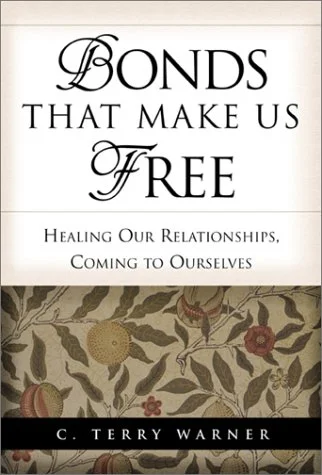
“Some things are only real because they represent what we think. When we learn the truth and think it, the old reality is no longer real to us and loses its hold on us. The truth sets us free.” -C. Terry Warner, Bonds That Make Us Free
When the syllabus for my Intro to Mediation class landed on my desk, I had to chuckle at the choice of text that was going to be guiding my studies. Inexplicably, as a 17 year old at the library with my family, I had picked up Crucial Conversations and later, after such a natural page-turner for a teenager, its sequel, Crucial Confrontations. Now in college, I was to read it again and put it to use in mediation training.
This happened a few times throughout the course of learning the behavioral sciences, where the texts were books I had read in my late teens. I blame Oprah. Many an afternoon in my childhood was spent watching the show with my mom. Talk about tween gold mine, right? It was practically Twilight for the 90’s. Or at least I responded to it that way. Due to my growing interest in watching grown women talk about their weight and self-esteem issues, I devoured self-help and relationship books. I became my very own, self-proclaimed, relationship/self-help expert. Key word: self-proclaimed. In lieu of my own experiences, I observed other’s relationships, listened to what the doctors on TV had to say, and read a lot of books. As for me, I didn’t have a serious relationship until I was 22, and even then I’m using the term “serious” about as loosely as Fox News uses “Fair and Balanced”.
Before getting married, I told Jon there were a few of my favorite “love doctor” books I had always hoped my future spouse would read. We agreed to each read the other’s five favorite books. One he gave me is called Bonds that Make Us Free by C. Terry Warner. If you’ve heard of the Arbinger Institute or Leadership and Self-Deception, it’s all done by the same people with the same concepts. This one is just ultra in-depth and covers pretty much everything you ever need to know. It's not religion-based, but does align neatly with certain religious concepts if you choose to think of the ideas in that way.
This book did a few things for me:
1) Singlehandedly blew up my imagined status as a relationship expert
2) Frustrated me with its truthfulness; it’s the kind of true that sucks because you have to do something about it.
3) Made me very happy
Many times after reading a book I will proclaim it is the best, most life-changing book I’ve ever read, instantly leading an all-out campaign to get others to read it...for about a month or until I read a different book that trumps it. I felt that way about this book, but the difference? Six months and at least 15 books later, I still feel it. This book was different in that it actually made its way into my life in tangible ways- my mind, actions, and most importantly, my heart, are different.
It initiated a paradigm shift, impacting the very way I look at all things relationships. Other books teach methods and techniques. Behaviors to emulate, steps to follow. This book builds a foundation for relationships to be built upon so that the behaviors come naturally and intuitively without having to try so hard with a list of how-to’s.
The whole book is based on the premise that you can act however you want. But if your motives, feelings, or thoughts are angry, blaming, resentful, etc. then whoever we are interacting with at that moment will feel it. This isn’t energy healing or anything, it’s the idea that we can’t hide our true intentions. Somehow, whether in our face, the tone of our voice, body language, or word usage, we will reveal ourselves. And in so doing, usually the other person behaves in kind. Once they do, we then decide that they deserve whatever we are giving them because their behavior justifies it. Forget the part about how we started it in the first place. In short, it makes an excellent case for how nothing anyone does is ever an excuse to blame them for how we are feeling or behaving.
The author calls acting in a blaming or judging way “self-deception”. He gives many examples of how this looks in everyday life. One simple example is this: A man and woman are in bed, their baby is sleeping in the other room. The baby cries in the middle of the night. The man hears the baby first, the woman is still asleep. He thinks, “I should go get the baby and let my wife sleep. She does so much for our family.” But then, his fatigue takes over and he doesn’t go right away. Thus, in that moment, by turning from the little nudge to do the right thing, he has deceived himself.
As he continues to lie there, he begins to think things like, “Well, I have to get up early tomorrow and go to work. She doesn’t have to… plus, I have gotten up three times this week already.” This thought pattern continues until his wife, who has been in the exact same position, nothing has changed, now appears to him as a selfish, lazy, fake-sleeper who is trying to make his life more difficult. Thus now, even if he does get up to get the baby, he feels like he is doing the world a great favor. His wife should be so grateful to him.
What happened? Literally nothing had changed about the situation in the two minutes since he first heard the baby, other than the fact that he felt he should get up, but didn’t. His wife is still the woman he thought he should serve, as she “does so much for the family”. Yet, he has now become “in the box” of self-deception, unable to see the situation clearly.
In the morning, she doesn’t mention anything about him getting up. He feels angry toward her, even though he knows she really didn’t do anything wrong. When they talk at breakfast, he is a little short. She responds in kind, not knowing what his deal is. Because of her reaction, he is now able to feel validated in his assessment that she is selfish and doesn’t care about his efforts. She begins to feel the same way and act accordingly, and so the cycle of self-deception is set into motion.
The only way it will stop is if one of them chooses to see things clearly, take responsibility for their own actions, and begin to be kind. To decide that they will look at the situation from the other’s perspective, assume the best, and act appropriately in spite of the other person’s behavior. When done this way, the other person soon only has their own behavior to look at, and loses the chance to blame the other. Odds are that they will then begin to soften and understand that the problem is with them.
After reading Bonds That Make Us Free, the level of responsibility for my own life and feelings that I came away with was immense. It gave clear antidotes to destructive thought-patterns such as:
You see the theme: placing any blame on another person for how you are feeling, behaving, or living life, IS the problem. So often we think that another person is the problem, and if only they would change, our life would be perfect. I repeat: believing that another person is the problem, IS the problem. You can see why I said it's a little frustrating. Oftentimes blaming is so much easier than taking action yourself to improve the situation.
A quote from the book:
“Fable: When we're stuck in troubled feelings we believe that all our feelings are true-- that is to say, we believe that by our emotions at that moment we are making accurate judgments about what's happening. If I'm angry with you, I'm certain that you are making me angry.
Fact: Though we truly have these feelings, they are not necessarily true feelings. More likely I'm angry because I'm misusing you, not because you are misusing me.”
Any, and I mean any, issue we are struggling with in conjunction with another person is within our power to solve. Let me be clear: it is not within our power to stop them from doing whatever they are doing. They could be acting really poorly. But it is always within our power to get out of victim mode and be in control of our own happiness and contentment with life. This doesn’t necessarily mean we should stay in a bad situation, or continually welcome destructive people into our lives. It simply means that if I say another person is responsible for my life in any fashion, I am in the wrong and the problem is with me, not the other person.
Some will say that there are times when they truly are the victim. Heinous crimes against them, brutality toward someone they love, child abuse, etc. In those cases, a victim is absolutely the victim and is not to blame for what happened to them. However, it does not mean that the person who was victimized must have a victim mentality the rest of their life. Giving things from the past, or other people’s bad behavior the power to cause us to live a less-than life, is choosing to live a life of self-deception.
The book explains the problem so much more eloquently and completely than I just did. It makes it so easy to see where you have walked down the path of self-deception in all areas of life. Even having the thought, “So-and-so needs to read this book! That would solve everything in our relationship!” is itself self-deception. I love it because it gives the reader all the power. Everything we need to do to improve our relationships and life is within our power. Not easy, but it’s there.
The solutions in this book aren’t in self-help-how-to mode. They are large concepts that have to be carefully customized to each individual’s life. However, I have seen amazing progress in my life and the lives of others who have adopted the concepts. It’s a life-long pursuit, as is everything to do with more perfectly loving others and ourselves. It is worth it!

They say everything you need to know you learned in Kindergarten: Share everything, play fair, don’t hit people and all that. This is knowledge you have in your brain. While helping my 9 year old nephew with his multiplication flashcards, he said, “Even when I went camping for like, three days, I came back and I still knew my sevens!” I told him he’s lucky that he’s a kid- because when he learns new things, they stick in his brain really well, so much better than his rickety old aunt's. We talked about how, when I’m watching the flashcards go by, the way I know the answer is by remembering what my elementary school teachers taught me.
Even though I multiplied numbers all through high school, college, and beyond, each time since elementary that I did so was because of a recollection of what I learned all those years ago. Each experience further solidified the answer in my mind, but mainly I only had to learn them once and I was good for life.
For things of the world, it is usually enough to simply remember them. The english word remember means to bring a memory or fact back to your mind. Remembering something in the most basic sense of the word is to pull it out of the deep storage of your brain and place it in the front. Acting on it, loving it, or feeling it, is not included in the standard English 'remember'.
In Spanish or Latin, however, the word remember translates to recordar. The root of recordar, 'cord', means 'of the heart'. To remember something by this definition means to pass it through your heart again.
Ever since this concept was shared with me by an Ecuadorian home teacher, I have noticed how important this distinction is when dealing with spiritual matters. I could say, “Everything I need to know about the gospel I learned in Primary”, and figure, “I know what the commandments are and I know right from wrong, therefore, gospel education: complete!”
The problem with that is that it takes the most important ingredient out of spiritual learning: The Spirit. The Holy Ghost is the mechanism by which important truths (all truth, in fact) are passed through our heart. Commandments, facts about Jesus’ life, Articles of Faith can be known in our minds forever. But, they will do us little good if they fail to change our heart.
Of course, “Changing your heart” can sound like an abstract concept, but there are practical ways to achieve it. I learned a big perspective-changing piece of information while listening to the Teaching By the Spirit Workshop by Gene R. Cook, Emeritus Seventy (amazing CD that will change your teaching/speaking skills for life). He pointed out that when Jesus visits the Americas, in 3rd Nephi, 20:1, He is about to administer the sacrament and also teach them the commandments. He commands them to cease to pray (orally), but not to cease praying in their hearts while He speaks to them.
Elder Cook points out the powerful idea that although the Savior of the World is in their presence and teaching them, they still need to invite the Spirit of the Father into their hearts and into the meeting. Even Christ’s teachings would mean little if they were not accompanied by the Holy Ghost.
Whether we are teaching a lesson, talking to a friend, giving a speech, or teaching a child, the most important factor is whether or not the Spirit is with us. The rest of the workshop talks about the need for worthiness and invitation of the Spirit as above even the most intricate of planning. Spending hours on handouts, table settings, our hair, the flowery words and analogies we will use, the dozens of extra stories we will share, all matter very little if we are stressing out, being mean to our husband, or failing to pray and ponder on what the Lord would have us do.
If we allow the Spirit into the room, into our hearts, and create an environment in which it can enter into the heart of another, the Lord can teach much more precisely, more personally, and with far greater impact than we ever can. Not only will He speak to our minds what we should say, He will also speak to the hearts of others exactly what they need to know. If we were only trying to get a concept or fact into our minds or into the minds of others, we would simply need to teach to the mind and create mnemonic devices for rote memorization. But if we want to help 'recordar' things (wrong usage, I know) we have already learned a dozen times, it is through the heart alone that this happens.
When I look at the promise to “always remember Him” in light of this definition, I see why we hear it every week. We already know what the prayer will say. We may have scores of scriptures memorized that we can bring to mind at a moment's notice. In the temple, we already know what is coming next. But since these things are truth, if we choose to not only remember them but to also 'recordar' them by prayerfully seeking His presence, the same words can pass through our heart again for the Holy Ghost to testify of their truthfulness.
With how easy it is for the toughness of life to kill our motivation to choose the right, the depth of feelings that come from the Comforter can carry us through with confidence and stronger commitment to endure to the end, in a more powerful and longer-lasting way than using only our mind can.
There was a time I was in the classic BYU ward (church group), doing the not-so-classic Provo thing of working, not going to school, and hanging out in Orem a lot. A stake president (church leader) spoke and said out loud what I had been trying to identify for years, while simultaneously removing a nagging guilt I hadn’t realized I had, but did have, until that moment.
He was speaking only to the Relief Society (group of women). He told us about his 31 year old, business-owning, not-married, daughter and how cool she was and all the cool useful and fun things she had done. He then got very stern and made this previously unheard-of statement:
“Some of you are here in Provo treading water. You are in jobs you don’t like, doing things you aren’t passionate about, waiting around to get married. Provo is not an interesting place, and it’s not the only place to meet other Latter-Day Saints. Get out. Go out there and make yourself a more interesting person. And in the process, you will meet other interesting people, and possibly a guy who has similar interests, and you will be even more attractive because you will be becoming more interesting than you are when you are here treading water.”
The lifting of rose-colored glasses, the sound of judgy parties getting off their high-horses, and the relieved sighs of those feeling the anxiety that comes from living only for potential marriage, were heard throughout the room. It was a beautiful message, and one I have imperfectly strived to live by ever since.
I think I was about 23 then, and I had already suffered through, and would suffer through more, self-inflicted 'waiting spells'. Times when cultural pressures-- that’s a cop-out-- my own fantastical imaginings of what my life should look like before I could really get going with it, got the better of me. Times when I was too lazy or scared to look further down the path of my life and figure out what I truly wanted to be- regardless of marital status. Over the years these annoyingly desperate times would become shorter in length, to the point where in the few years prior to my marriage they would occupy an overly hormonal weekend and no more.
Sure, the entire single population (LDS or not) and married friends continued to focus on little else besides my relationship status, but my feelings of patience and contentment grew stronger as I set my sights on becoming “more interesting”, rather than “more married”. In addition, I added more interested to the equation as well, as I found it was a surefire way to become more interesting. I wanted to be more interested in those around me, in the world around me, and the opportunities all over the place inviting me to grow.
Along the way I met a woman in her early thirties, active LDS, beautiful, amazingly fun, and single. I had never met someone so interested in aggressively seeking fun while also being highly responsible. In fact, she was in HR at the company where I worked-- the department where fun goes to die. I learned that she competed in karaoke competitions dressed in full character attire, had become certified in flying trapeze, enjoyed skydiving (who doesn’t?), and was forming a kick-ball team to compete in a city league.
I’m also ashamed to say that until then, I didn’t know that someone could be in her place in life and not obsessively talk about dating and marriage. I had simply never encountered it. It was so refreshing to not be painstakingly discussing the ins and outs of love life, but rather the wild new adventures from the weekend.
The fact that she was the first LDS person in my then 27 years of life whom I had met with this attitude is a sad, sad fact. Either it’s sad because I didn’t expand my horizons enough to meet more people like this, or because there aren’t many women like this out there. Considering I was in something like 22 different singles wards where I spent a lot of time with women, I’m pretty sure it’s the latter.
The tricky part is this: once married, it’s even more important that you are an “interesting person” who is also an interested person, curious about the world, motivated to learn, and willing to seek appropriate novelty. It has been repeatedly shown that variety is one of 6 basic human needs, and also that it is crucial in a marriage. Blending the safety of consistency with the adventure of variety is a challenge that, if mastered, will keep a marriage going. Good marriages end because of 'boredom'. Bored people are boring people. A desire to learn new things, a willingness to step outside of your immediate circle to see whom you might help or learn from, and becoming adaptable to new situations, is not a born-with or born-without trait. It is a skill that is cultivated through exposure and practice.
If our entire focus is finding a mate and nothing more, then the moment we find him/her, we are already heading for a boredom+unrealisticexpectations=disaster. The marriage is already doomed, as we are essentially saying, “I’m choosing to marry you, and by the life I’m currently living I am demonstrating that I’m choosing not to concern myself with anything other than you. Therefore, I’m counting on all of my excitement, fulfillment, passion, compassion, good works, fun, and pleasure, to come from you.” Yikes, needy much? I’d be lying if I said there haven’t been times where I’ve put that kind of pressure on my husband, due to that same nasty habit I picked up long ago of being too lazy or scared to look at my own life and what I wanted to make of it.
Two individuals who spend time seeking learning and developing their healthy interests and hobbies are going to be able to go out into the world --either together or separately-- and come back home, together, and share the new insights they have garnered. They will learn from each other, they will grow as individuals, and their synergy will be unstoppable. They become a force to be reckoned with in their life as a couple, far more than the sum of their parts. They will be able to more positively impact their children and their communities, and are more likely to become intentional about their purpose in life. Not to mention, each person’s desire to learn about the other increases, which leads to more love for each other, which leads to more service to one another, the glue that holds a couple together.
Developing this as a single person is crucial to getting out of the waiting mentality and finding fulfillment in the infinite areas there are in which to serve, love, and play. And more likely than not, it’s in taking your eyes off of the supposed “Holy Grail” that you become relaxed, joyous, and interesting enough for the right one to take notice.
But even if not...
For whosoever will save his life shall lose it: and whosoever will lose his life for my sake shall find it.
-Matthew 16:25
1. the improvement or clarification of something by the making of small changes. 2. the process of removing impurities or unwanted elements from a substance.
From what I've gathered so far, great relationships are made and broken in the details. Refinement isn't alchemy, completely overhauling what currently is and turning it into something it’s not. Refinement is simply removing impurities from something, little by little, until its purest form is revealed. Sometimes it takes fire, other times pressure, and every time, when humans are involved, it takes love.
I've been interested in the idea of refinement since I was a wee ‘tween, when I read this little ditty, referring to the verse in Malachi which says that Christ will “sit as a refiner and purifier of silver”. Spoiler Alert: The story talks about the process of refining silver, and how the silver must be held over the hottest part of the flame until the imperfections are removed. The silver must be carefully watched or else it will be destroyed by the heat. The silversmith knows the silver is complete only once he can see his reflection in it.
As I’ve grown up and fallen in love with all things connection and relationship: how people interact, the ways they choose to love, the ways they hurt each other, the ways they bring out the best or the worst in others or themselves, one common factor always emerges: the small things are where the differences are made. Minor impurities can hurt, but even the most minor of improvements can work wonders.
I believe the enemy to careful and deliberate refinement is found in the idea that relationships with others, with oneself, and with God, just happen. That if the relationship is good or right, it will just work. I once heard that the opposite of love is not hate, it is indifference, and over the years I have found this to be true. To hate something, some form of energy or action must be exerted, and oftentimes, with great passion. So it is with love. Passivity and indifference on the other hand, require no action, no concern, and no thought, much less passion. I can think of no better way to kill the love in a relationship or prevent a new one from forming than by taking no thought, no concern, and no action for it.
The line between being passive in a relationship and practicing personal refinement to improve it, can appear very thin. Most people (myself included) struggle to admit, or even realize, that they are coasting in their marriage, or mindlessly forming their personal identity. That they are waiting around for a good Date, or paying little attention to how and why they practice their religion. It’s normal to feel like taking it easy, especially at home where we just want to relax a little. We want to be loved for 'who we are', 'for better or worse'. Being loved as we are right now (and accepting ourselves right now) is a great feeling. But that love should be used as fuel to propel us to greater heights, not as an excuse to rest on our laurels and maintain the status quo. Being loved when we are in our purest form, our most authentic, free from the walls and fears keeping us at arm's length, is a joy that far surpasses simply being accepted as we are in spite of our flaws.
The impurities in ourselves, in our marriages, or in our relationship with the Lord aren't what make us who we are. They are merely specks of dust clouding our true image that can ultimately be revealed with small, consistent efforts. Being held over the fire is painful, but depriving ourselves and our loved ones of better-than-OK relationships is a tragedy.
I’m still trying to figure out the best ways to clarify and refine the most important areas of my life. Seemingly infinite numbers of ways to fix life, fix relationships, and fix myself appear everywhere I look. It's easy to feel overwhelmed by the pressure to be perfect. But refinement isn't perfection; it's a process. This site is a place for me to compile the things I’m learning about that process, the things that have worked for me, and the things I want to work on in order to continually revamp my commitment to chipping off my rough edges. There are incredibly refined people out there from whom I can learn amazing things. Suggestions welcome!