Get Rich: Why Being Interesting Matters
This started as an Instagram “rant” of sorts, so please forgive the sloppy social media shorthand.
Read More
Get into Life
This started as an Instagram “rant” of sorts, so please forgive the sloppy social media shorthand.
Read MoreCulturally, we have sent a message that a person is not of complete value until they are married. Which naturally leads to the belief that if one loses that value through loss of the marriage, they are less-than. They aren't a "full" member, and by extension, a “complete” daughter of God.
Read More
"We’ve come so far my dear, look how we’ve grown..."
Our marriage is Five Years Grown now and I have some things to say now that I'm officially an expert. FIVE YEARS!
Sometimes I see posts with captions to this effect: “I don’t get why people say marriage is hard work. If you treat each other well and just show love it doesn’t have to feel like ‘work’. Love is easy and being kind feels good!”
That’s sort of like saying, “I don’t get why anyone has a complicated relationship with food or their weight. You just eat fewer calories than you burn, then you always stay a healthy weight! What’s hard about that? Food is yummy and a healthy body feels good!”
The number of people who are full of hope and dedication on their wedding day is greater than both the number of those who get divorced, and the number of people living in unhappy marriages. No one is trying to have a hard marriage.
Few things shared online offend me, but this does. Posts disparaging my religion or my political views don’t cut as deeply as a well-meaning message saying that the only reason marriage feels “hard” is because someone in it is doing something wrong:
Bad attitude, bad match, bad effort.
This is a message that perpetuates the myth that marriage itself should only exist if it is comfortable and convenient for everyone involved. It focuses on marriage being for some and not for others- "others" being anyone for whom sharing life with another person feels like "hard work" sometimes.
It leads to some of those "others" they just aren't "cut out for marriage".
Listen folks, very few people are cut out for marriage... before marriage. Becoming good at it can take a lifetime, and that's precisely the point.
I believe a marriage that comes naturally and “just works” from the beginning is a gift some people are given, just like some people are given the gift of easily relating to others, doing math, or having faith that is never shaken.
For the rest of us, marriage was designed to be our most challenging, transformative experience. God Himself is in a marriage, and His greatest work is done in partnership with Heavenly Mother. When I remember this truth, I immediately question why it matters to me where my husband puts his towel.
There is no time that I’m more grateful for the belief in and power of Eternal Marriage than when mine is at its most difficult. It would seem like that's when the idea of being with someone for eternity would scare the final shred of commitment right out of me.
But in those moments, that’s when I learn to shift my success gauge from measuring Arrival to measuring Progress.
Marriage is about enjoying daily life and helping one another through it. It's about sharing life's big moments and forming families, and all the things people think of amid the wedding day bliss.
But it’s also about teaching us how to fully give ourselves to love and becoming more than the sum of two parts, and that can be a very tough stretching experience. As stretching as the hardest work out there.
"Because the home is so crucial, it will be the source of our greatest failures as well as our greatest joys." (Neal A. Maxwell)
With such a tall order, some of us are challenged within ourselves when we have another person viewing our every shortcoming, like living with a magnifying mirror who loves you.
They're nice about it, but it can still freak you out to know how much they can see. Insecurities we never had reason to face in our more distant relationships can rear their ugly heads and bring out sides we didn't know existed.
Some find the biggest challenge allowing another person into our heart enough to let them heal the wounds gathered over a lifetime.
Others among us press on when their partner is the carrier of scars from a traumatic past, keeping their willing spouse at arms length, struggling to find the very connection that would heal them.
Some of us never had a model for what dedicated love looks like, so despite our best efforts, we take unhealthy strides to keep the union together, ultimately eroding its fragile foundation.
Some of us have a disparity in commitment level with our partner; no matter how much one person wants something, this endeavor requires all hearts all in.
Others of us have experienced unthinkable tragedy with our partner, the kind that shakes faith and puts everything into question- including the union.
None of these weaknesses are inherently selfish, unloving, or intentionally harmful.
A wise friend once taught me that most people live up to the light that they have. It’s the exception when people are out there trying to hurt one another, trying to make life difficult for someone else.
This goes for marriage, too. I believe aside from bonafide abusers, most spouses would give anything to see their husband or wife happy- they often just have a lifetime of weaknesses and insecurities to overcome before they can understand how much power they have to make that happen.
I'm reading a book where a recent widow mentions how, when her husband was very sick, she would help him with his breathing mask and one day was getting very frustrated with it when it wouldn’t go on correctly. She was flustered and annoyed and acted as such.
He remained patient, and when the nurse came later that day, he said to her, "Help Ginny with the mask. She's losing her confidence."
The author continues, "That response...is what true charity looks like. Rather than be offended by my behavior, he interpreted my actions as having come from a place of ignorance rather than flawed character. When we are filled with charity, we understand that the behavior of others is most often motivated by their desires to do good, even when that is not the reality of their actions."
He is trying. She is trying. It's not her character, it's ignorance. Ignorance of her own capacity for change. His ignorance of your faith in him. Ignorance of the potential two committed people contain to change the entire landscape of the marriage.
Marriage is a lifelong mission to change us. If we aren’t vastly different inside from years of efforts to meld our hearts to another’s, we didn’t do it right.
We can make it easier on ourselves the more we allow love rather than brute force to be the changing agent, but even when putting our heads down and powering through feels like the only way, it counts. Hanging in there just to hang in there is valuable, too.
Holding on until you are strong enough to carry your Love at a moment they feel they can’t go on anymore, is good.
Giving one last push to forget yourself in order to give them what you thought you never could, will never be a wasted sacrifice.
He’s trying. She’s trying. Give them the lifetime you promised them to become who, perhaps at times only God, knows they can be.
If the goal is to get to a point where marriage comes easily, you may be disappointed for a long time. But if the goal is to get to a point where marriage brings you joy, that is within reach.
Sacrifice is power. Selflessness is strength.
It gets easier because being willing to work is half the battle. It gets easier because you’ll realize that “needing work” and “broken” aren’t the same.
It gets easier because Charity Never Faileth.
I celebrate every great day my husband and I have together, because our success is in our progress. I know we created these good days through hard fought sweat and tears, and therefore no matter what lies ahead, we can create more.
I know many of your stories, and I know you can say the same. I have listened to your sobs over the phone as you tried to work through questions your wedding day self couldn’t have imagined.
I've held your hand in my home when you felt like your only option was to leave your own for the night.
I’ve read the lengthy texts, sent many of my own, and spent hours exchanging thoughts as you’ve grappled with the choice you have to hang on or let go.
I’ve cried with you when we both recognize that the more difficult choice is to stay.
I know what you’ve come back from, the demons you’ve fought off, the thrill you’ve felt when the two of you can happily cuddle up together and share a laugh. After what you’ve been through, the high price you’ve paid, that is a triumph.
I’m here for the fighters, the hard workers, those in the trenches.
I’m one of you, and I can hardly believe how far we’ve come.
Happy Five Years to my one and only. You make me feel like I am both enough and becoming more.
Unlike the Pinterest meme, I don’t believe that “everything happens for a reason.” I believe in every individual’s God-given freedom to think and act however they choose (within or without the law), which can lead to some truly terrible and unfair events.
Read MoreI would like to be able to say that I never again did something dumb to win another’s approval, but I can’t. What I’ve hopefully done is made it to a place where I am trying to win the right people’s approval, for the right reasons, and in the right ways.
Read MoreIn Maslow’s hierarchy of needs, self-actualization comes dead last. There is no time for navel gazing when your feet are bleeding and you woke up covered in frogs.
Read MoreBreaking news: Religion isn’t cool. Shocker.
Read More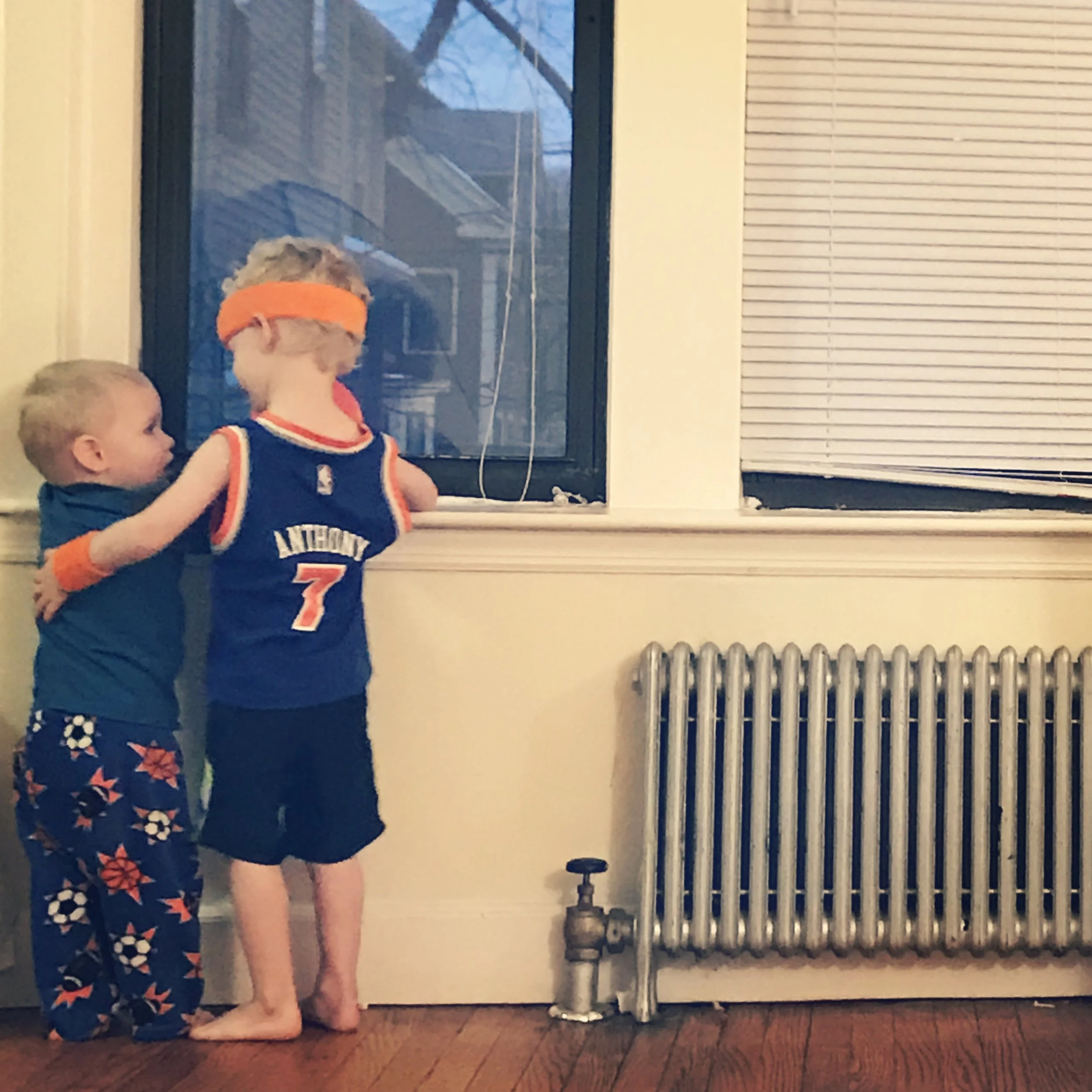
Lately, each time I've thought about writing a post to get going on Relationship Refinery, I quickly feel like it's futile and almost superficial in the midst of the global events going on. So I didn’t write; I just did a lot of angry texting and fight-picking on Facebook. You may have noticed.
Then, I quit. All of it. Social media, TV, caffeine, sugar, arguing, blaming, and all that. The numbness went away. I began to feel again, to think about things other than politics again. That was a nice week... (baby steps)
During that week, I watched Jim: The James Foley Story for the third time to bring me back to myself.
Jim the film is… well, it’s something I will flatten if I write too much about. It needs to be seen to fully get the picture of who Jim (James Foley) was. But let’s just say the film made me think about Jesus, a lot.
In short(ish), James was a somewhat accidental conflict-photojournalist who first was captured in Libya as he documented their uprising. He was released after 45 days, and to his family’s dismay but ultimate understanding, he went back to document the horrific scenes of Aleppo, Syria.
He was captured by ISIS/ISIL, which at the time was an unknown force-- not even the U.S. government (seemingly) knew about, much less suspected, this group. He was held in the worst conditions imaginable with another journalist for about a year, before being transferred to yet another prison where 16 journalists from other Western countries were being held.
After another year, most of the other journalists were released, while James was taken to the top of a hill, made to read an anti-American script condemning his family and country, and then beheaded on camera in one of the most viral stories of all time.
The documentary was made by his family and does a remarkable job at making the story an uplifting portrait of James, amid the most somber and heartbreaking circumstances. The things I have learned from his example I fear can’t be captured here, but they are by far the most profound things I have picked up from something I watched on TV, and that’s because they helped me better understand Christ and His example.
Here is a person who is in the worst place imaginable, with the least amount of hope and the most amount of uncertainty. The other prisoners talked about how during the torture sessions, they would have much rather taken physical torture than the mental torture of never knowing what was in store for them. James, a devout Catholic, really wanted to pray. In order to do so, he converted to Islam so that even though he wasn’t able to verbally pray to Jesus, he could kneel five times a day to pray to Allah and hope his prayers were being heard.
One of the other prisoners described it this way,
“Religion is like language. It's the love that matters. So even though James prayed to Allah, he needed that. He needed that connection to his God, and he also needed that connection to his mother and family.”
In these dark, dark days, James thought about beautiful things and was known to always be at peace. On Christmas day, as the men sat in a circle telling each other something they liked about the others, one of the prisoners said to James, “You are pure good. There is no evil in you.” He then went on to say that that Christmas, being with James, was the best of his life.
Can you imagine? You’re a prisoner in a literal death chamber, experiencing the best holiday of your life because you’re sharing it with someone who brings light into your heart.
Amid these conditions, Jim was described by every prisoner as a steadying force, unselfish and honest. That although every one of them at some point had “cheated” with food, hoarded food, snuck food without sharing, Jim never did. Jim took the worst of the beatings because he would request the most of the guards- always petitioning for more food for the group.
At one point another prisoner and James had endured excruciating physical torture for hours. The other prisoner, Daniel, was in the corner crying from what he called the worst pain of his life. James, somehow not in tears, reached out to comfort Daniel in the midst of his own suffering.
One of the most powerful examples of his selflessness was when Daniel was about to be released. He thought it would happen any day now, yet James had no word whatsoever that he himself would be released anytime soon. After six days of thinking he would get out that day, Daniel was in the depths of despair because it hadn’t happened and was terrified of what would happen if he didn’t get out. Jim went to his side, put his arm around him, and told him it would be ok. He said, “Daniel, you are going to get out. It’s going to be ok. You will go home.”
He then went to the other side of the room and sat quietly. 15 minutes later, the guards came to release Daniel.
The fellow captives were so certain of Jim’s goodness through and through, that one of them said that he is positive that even while Jim was kneeling before the terrorist, about to be murdered, there’s no doubt that Jim was admiring the view of the sunset as he passed.
Another ex-prisoner remarked, “He died as a free man. I ended up being released; he ended up free.”
My little brother and I watched this film together and afterward he wondered aloud how he himself could make that kind of an impact. Go to Libya? Syria? Zambia? Become a conflict journalist?
We talked about how, even within the best of intentions, that focus can end up being one of the Adversary’s tools used to keep us locked inside ourselves. You can’t do anything if you can’t go abroad. You can’t do anything if you can’t reach the masses. Or change a law. Or unseat a president. Or feed the hungry millions. Or have some big fancy job making a lot of fancy money.
Every time I watch James’ story, I feel immense sadness for his family. But I can’t help but feel their pride as well, particularly his parents’. To have a child die is a tragedy unmatched.
But when I think of how remarkable it would be to discover that my son was known, in the darkest, most hopeless place, to be a person of integrity, unfailing charity, optimism and humility... I can’t help but believe that their joy in that knowledge has gotten them through many dark days.
Nothing would put my heart at more ease than knowing that Charity, the pure love of Christ, was my child’s legacy.
His parents said that they came to know their son through the people in his life, after he had passed, as they met his friends and former fellow captives for the memorial service. People like him don’t go around talking about how they are saving the world one good vibe at a time, so other people have to do it for them.
When I say the film makes me think of Jesus a lot, it’s because I’m given a visual of perhaps how our Savior might have conducted Himself had He been in similar circumstances: serving the poorest and most war-torn among us, giving up all material possessions, remaining faithful and connected to God throughout it all, and always, always being there to comfort another in pain despite His own, likely worse, pain.
That’s why I watch it despite the sadness. It reminds me that if all I do in this life is look outside myself every possible moment, wherever I am, even if no one but a few people in a prison cell will see it, it will be the best use of my life.
Recently I was visiting my aunt and uncle in California with my two toddlers who were out of sorts from a month of travel. My three-year-old had imprinted on this basketball and needed to play with it at all times. He had taken it outside where it was raining, then brought it in and was distraught that it was wet.
Of course my simply toweling off the ball wasn’t good enough for him, and he kept screaming. Since I found this to be unreasonable (“I want it dryyyyyyy”), I was bracing myself for a long tantrum and not giving into his lunacy. My aunt, who was minutes away from needing to leave for church, patiently came over and said, “We could go dry it with my blow dryer. Would you want to do that?”
As I watched her blow dry my son’s wet basketball, a sort of preposterous thing, with a smile on her face as if it were the most normal thing in the world--all while my son’s tears streamed down his face and he calmed down-- I had the thought, this is what the pure love of Christ looks like. I was surprised, because there were a dozen other things she had done that week that might have looked more obviously that way.
But this encompassed the spirit of Charity in such a lovely way that I couldn't miss it. Charity is discerning, but when it has to choose, it errs on the side of looking at something as “helping” rather than “enabling”. It doesn’t ask questions like, “But if I give in this time, then won’t he keep asking for other ridiculous things?” or “Yes he’s sad, but it will be good for him to not get his way.”
It says, “You know what? What would it hurt to help him feel happy? I have the power to comfort him, it’s not hurting him or me, so I’m going to try.” It’s not concerned with spoiling, or only helping those who help themselves, or forcing lessons onto a person. It’s just about giving when we can, and trusting it will all even out somehow.
"There is no such thing as a self-made man. We are made up of thousands of others. Everyone who has ever done a kind deed for us, or spoken one word of encouragement to us, has entered into the makeup of our character and of our thoughts, as well as our successes." -George Matthew Adams
So I’ll write. Because relationships--typically one-by-one and not by the masses-- are how we make the difference, and I need an endless stream of reminders to push me outside of my default stay-in-my-bubble-and-keep-things-medium mode.
I mean, literally as I write this, I just snapped at my husband for looking at me while I'm eating a messy bagel. As I write this thing about being just a tiny bit less selfish and a tiny bit more kind, I'm snarky over perhaps the dumbest thing ever.
I need these reminders more than everyone.
I'm easily prone to overwhelm, so my purpose for this site is to provide a place to remind us that there is much refining to be done without total overhaul. Push ourselves without pushing our own buttons. (Just made that up, clearly. Will someone please think of something catchy for this idea... I'm too overwhelmed.)
Refinement: it isn’t everything at once; it’s something at many times. (Better?)
It's thinking of your spouse or your mother or your neighbor in need even one time when you’d normally be thinking of yourself, and then actually doing something with the thought.
It’s looking at the towel on the floor and making the decision to be happy there is a person in your life to put the towel on the floor, rather than throwing said towel in said person’s face.
With God, it’s kneeling to pray just one of the times you would rather do it curled up in bed, or just praying a little, maybe during a commercial break, when you would rather not pray at all.
With yourself, it’s literally patting yourself on the back (I’m serious, get your hand and put it on your back) after you do that 15 minute workout or make a $5 donation to that GoFundMe page, when you had the strong desire to stay home or keep scrolling.
It’s after a week of tiny things like this, suddenly thinking, see? Little by little, I can do this. I can be better than I ever thought possible. So little has changed this week, but my hope has become brighter than it has been in years.
That’s what’s amazing about refinement. It’s not about the literal amount of change made in a given area; those are drops in the bucket of endless things you could be doing.
It’s about showing up and showing God you haven’t quit. You haven’t thrown in the towel (or thrown the towel), even when your desired outcome (of the election, the marital disagreement, the promotion or the kid’s birthday party) didn’t occur.
Give Him an inch, and He will give a yard.
That’s why I’m here. I’m going to keep showing up to this site, to put on screen things that matter to me, even though my voice is small and far from revolutionary.
If I can help someone think a little more about their spouse’s point-of-view, who in turn is more compassionate to a colleague in need, who is then more motivated to listen to their child with a little more patience, who then goes to school and befriends a lonely kid… then it's a ripple worth making.
There are no sandblasters here, only little chisels and scraps of sandpaper chipping away the calluses we’ve developed from staying in our same ruts, climbing the same mountains, pushing away the same calls to someplace higher. Little by little we can soften up, and ultimately, shine.

“Oh my… you should see Clayton run!!!” This text from Jon exhilarated me from out of the gray, 21 degree abyss outside my anxiety-inducingly cluttered apartment which I couldn't get myself to clean because...winter.
My boy had been winding up like a little toy for the past week, each day becoming a little more bouncy, a little more loud-spoken, a lot more restless. A kid who religiously took a two hour nap and had always slept 13 hours at night had started to play instead of sleep in his bed each afternoon, and was awake at 4 am every morning. This wasn’t going to work.
650 square feet had officially become too small for his little long legs. The legs on which he stood as a baby and would not bend to sit down.
I remember showing him one day, thinking maybe he just didn’t know how to sit,
“Hey look! You can relaaaax. See how nice? There’s the movie, and you can just sit in front of it. Like a lazy person. Isn’t it fun?” To which he instantly responded by jumping up to resume standing.
To play, he would pick up an object, any object, and run from one side of the apartment to the other, over and over, until I captured him mid-lap and took him outside to sprint.
This could be classic codependence, but it's my truth so hush your judgements: There’s an area inside me where I carry a sort of monitor for each child’s feelings. It’s like I have my feelings, frustrations, desires, and sense of equilibrium.
Then I have his. It's not a mind thing; it’s a gut thing. This monitor keeps track of tension and balance of his inner self. It’s as if when each day passes that he is unable to run until he is out of breath, a marker is raised on the monitor’s gauge.
If he’s gotten less sleep for a few days, a marker goes up. If he hasn’t had any time alone with either parent in awhile, up. Over time, I feel the unrest that he’s having and it makes perfect sense to me why he’s grumpy or hyper.
I feel the need to resolve that for him as if it were my own unrest and I don’t feel settled until I do. I can still feel happy myself, but there’s a mini alarm going off inside that’s saying
WARNING: CLAYTON NEEDS OUT! CLAYTON NEEDS OUT!
So that day when Jon took them to the enormous indoor playground that would only exist in the bitter Northeast and sent me that text, my heart soared. I could see Buddy’s little body shoot out of Jon’s arms like a rocket, bolting to the scooters and bouncy castles and laughing his freedom laugh. The unforced, impossible to contain elation that comes from exclusively living in the moment, something only a child can possess.
“They are soooooo happy”
In picturing it, I felt the incessant alarm turn off. Like the steam switch had been opened on a boiling pot. I could almost feel his energy burning off of him, propelling him forward, giving him that happy exhaustion that a full day of play and smiles does.
Living the City Life can be hard, especially when the city is cold and the apartment small. I write this from a one-bedroom apartment where we started with one baby and added another, where baby #1 resided in a Porta Crib in a nook in the kitchen and baby #2 stayed in our room.
The kids have graduated to sleeping in the bedroom, and Jon and I move our mattress out each night to sleep in the living room.
We eat meals, do projects, watch movies, and play Play-Doh from a tiny table in the corner of the living room, store our huge double stroller in the entryway, and host overnight guests on our fold-down couch surrounded by toy bins.
Whenever we want to go somewhere, we take our little parade a half block away to the car where they know to stay on the sidewalk while we get loaded up.
“Stay on the sidewalk” often means sprint up and down sidewalk, bumping into stranger’s legs while those strangers, unfamiliar with children in large quantities, sometimes look on with more than a hint of worry.
But mostly they smile and tap the kids on the head, saying things like, “Those were the days,” or my favorite, from a homeless gentleman watching Clayton run, “The future is safe.”
Our ground-level back window faces the entrance to the dumpsters, so to take the garbage out we send one of us (Jon) outside and the kids and I throw out bags to him to avoid multiple trips.
The kids look forward to watching the garbage trucks come, and to watching dad appear out the window. Sometimes we pass children through that window for efficiency in car loading, and talk about fast escape in case of fire!
Since we live across the street from Campus, our walkways and stairs are immediately shoveled and salted, and sometimes our street is blocked because a Supreme Court justice or the President are visiting the school.
Clayton learned to walk by stumbling, then walking, then running through the common areas of Harvard Law School, one of very few underaged voices heard in that building.
Living so close to the school is what keeps our rent high and our apartment small, but it’s also what allowed Jon to be home for breakfast, lunch, and dinner throughout the grueling law schooling process.
It’s what has allowed us to make friends with fellow students who are too lazy to trek very far to come visit (just kidding, Millennials), and given us access to an array of people in stages of life different from ours.
It has given us the chance to stop by all kinds of holiday celebrations, marches, peaceful protests, sit-ins, and birthday parties and baby showers happening across the street, spontaneous ventures we stumbled upon while walking through on our way to CVS or Shake Shack.
Life feels very colorful, very random, and often requires creativity to get what used to be basic life done. The image that comes to mind while trying to organize a closet or fold laundry or put together a new piece of furniture, is one of those little puzzles where only one space is open and you have to move all the other pieces one at a time into the free spot temporarily until you can maneuver them into their correct spot.
To think that some people in Texas live life with ROOMS THAT ARE EMPTY ALWAYS is actually hard for my brain to imagine right now. How would you ever have a disorganized closet??
We keep very little stuff- like, very little. For two kids we have two bins of toys. For two adults’ clothes we have two single door closets. Every time we leave for the summer and take just a couple of suitcases full of stuff, I decide I’m going to get rid of everything we left at home because obviously I didn’t need it if I went without it all summer. Then winter comes...
I’m not going to go into all of the “but on the other hand, we are closer together because of our closeness in proximity.” Sometimes that is true, other times it’s not. But what is true is that we chose this life.
We want it this way. We are so, so lucky to get to want it rather than it being how it HAS to be. Because let’s face it, choosing to go without (which we rarely feel like we are doing) is a lot different than having to go without.
Choice is always, always something for which to carry immense gratitude.
Because of this choosing, I have a few words of support and encouragement for anyone struggling through tight quarters with little ones and not so little spouses.
Listen: When you are feeling like your baby’s nursery isn’t decorated beautifully, and you worry that somehow she will be deprived of the ideal amount of stimulation that will get her to that key milestone early enough to get her into that Ivy League college,
or give you both the opportunity to bond in the sweet reverie of a white nursing glider under soft recessed lighting,
or that there’s simply NO WAY she can sleep well without a mobile and twinkly stars on the walls…
Just do this: picture my son in a Porta Crib in the corner or a five foot wide galley kitchen, lodged between the pantry and the back door, facing the dishwasher, with a box fan on the counter for white noise and a sheet acting as a curtain between his “room” and the living room.
Then know that he has slept soundly there for 2 years, going to bed at 5pm.We didn’t cook past that time, and I think it was good for our figures. He is well-adjusted by all medical accounts, and he's progressing normally in every way, or so they tell us.
When you find yourself worrying about your bare walls, or your “lacking” table settings, think about my apartment I’ve lovingly labeled 'Dorm Room/Church Nursery Chic'.
Anything and everything that I allow into the living space serves a purpose- a functional, childproof purpose, and photos on the wall and table cloths on the table don’t fit that description.
If I’m already spending several moments a day blocking baseballs from hitting my head or chipping cereal off the chairs, I don’t have the time to waste repairing shattered picture frames or doing extra laundry.
Playtime is learning time for kids, and rest time is savor time for parents. When I rest from tasks that will only reappear immediately after I do them, that’s when my joy in my children has room to re-blossom.
When I look at the babies instead of at the things I’m trying to keep them from destroying, I remember why I’m here, on this floor, playing this "game".
When I put my mind on the tower we are building instead of on the moment they will go to sleep, I get to cash in early on all the investments I’m making in them. They notice; I notice.
My children nor my marriage are in perfect form at all times. Well, maybe perfect, because 'perfect' means complete, and they are complete- always.
But they aren’t always tidy, well-behaved, happy, and scream-free (my kids nor my marriage). But they are doing fine; we have everything we need, and pretty much everything we want.
Anything that we don’t have that we do want, wouldn’t be found in a bigger apartment or more stuff or a nursery for the baby. So please let me put your heart at ease: it’s going to be okay.
Delete Pinterest and Instagram for a week, and you’ll see just how amazing your messy, puked on couch feels then when your partner and your tiny ones pile on top of you at the end of a rough day.
Remember what it’s like to see them “soooooo happy” and remember that stressed-out you has a hard time creating that, seeing that, and worst of all, feeling that.
I can promise that the tasks that take up a huge part of our Mom days can only assist minorly in creating that feeling inside.
Trying to stick with the minimum in low-yield areas and the maximum in intangible, unrepeatable areas is my constant aim and struggle.
The minimum to keep the house uncluttered and peaceful (which in my experience is most easily done not in the house, but in the store or on Amazon. If I never buy the stuff in the first place, I never have to make decisions about whether I’ll spend my time taking care of my stuff and space or whether I’ll be with my kids and my husband).
The minimum to keep our bodies healthy and well fed (unless prepping and cooking food brings me great joy, which sometimes it does).
The minimum to create beauty and cleanliness that allows me to walk into my home and feel peace and comfort, photogenic or otherwise.
The minimum dollars spent to provide safety, warmth, and space for each member, without adding more stress with increased rent or mortgage.
When I look back on things, I only remember their general vibe. I don’t remember how long I procrastinated emptying the Diaper Genie or how many three-course meals I prepared, or likely didn’t prepare. I just get a sense, a feeling, of what that time in my life was like.
I sense whether I was worried a lot about what others were thinking of me, or whether I was often stressed about the state of the home (spoiler alert- my house usually looks the same whether I’m hyper-vigilant or relaxed, but the comfort of the home is deeply affected by which one I am).
Whether my marriage was creating synergy or tension, and whether I was stopping to soak in* my children.
*Sidenote: “soak in” is not code for how many art projects I did with them or outings I was planning and taking and on and on. My kids are 1 and 2 years old. To keep my wild ambitions and mom-guilt in check, “soak in” has to mean for me, to just be with them.
In Shonda Rhimes' book she talked about her decision to “always say yes” when one of her children asks her to play with them. She says that although that sounds impossible to both working moms and otherwise, she defended it by explaining that most of the time, a child will be more than happy with even 15 minutes of purely focused play. No phone, no hopping up to do “just this one thing”, no wiping the snot from their nose (I added that). I have found this to be true.
Just see them. They are almost grown. Be here now.
But just as importantly, be you now. There is no waiting for another time or place where you can fully thrive; such a place doesn’t exist anymore than this place does.
Create a space within your tiny space, figuratively or literally, and crawl into it and create. Search. Read. When it’s too small for even that, get out. Connect. Serve. Breathe.
No place is too small for that.
I'm so eager to get back to writing, to discussing things other than Trillary and Hillarump, to move my blog past all the depression talk...
Read MoreIn college, I studied behavioral science which covers psychology as the central science. I could list the symptoms of depression off the top of my head.
And yet, the signs escaped me when they were mine.
Read More~~This one is for my baby son. He never meant us any harm~~I’ve allowed myself to be offended at every level, and from every level of intent from mistaken to purposeful...
Read More(Photo: Us as babies on our first trip together.) ...I often heard the phrase ‘Love is not enough’. As in, “Love is not enough to make a relationship work long term". But wait, Love is everything, right? All we need is Love?
Read MoreI didn’t take my native culture to New York with me. I had always been dead-set on marrying later, having children later, and having them because I wanted them, not because of any social, religious, or cultural pressure. That’s how I went into it, but nothing could have prepared me for the depth of feeling I would develop for the children I lived with, loved, and nurtured over the next few years. It was as close to motherhood as I would come for almost a decade.
Read MoreThe truth is, I haven’t told a single soul this story, not in much detail anyway, and not ever free of half-truths. My closest friends don't know the truth; even my parents aren't aware of the saga. I'm sorry, everyone. My husband, on the other hand, has chuckled with friends about this now infamous night in our marriage because unlike me, he is comfortable making light of his follies.
Read More“Can you believe the worst year of our marriage is almost over?” Oh, the romance of a one year anniversary.
Read More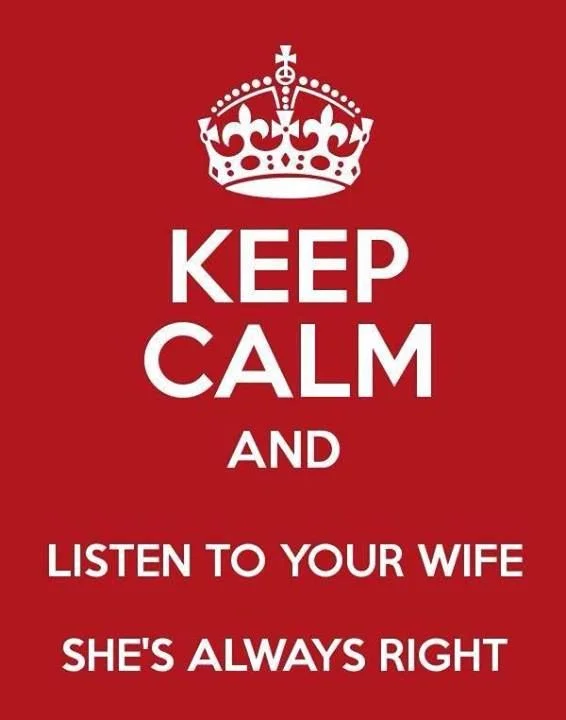
Hulu has appropriately stereotyped me through the Big Brother that watches my clicks around the Internet, and loves to show me commercials for cleaning products. Cascade must have the deepest pockets, as two of their spots have taken over my TV watching experience. I’ll outline one:
Husband is emptying dishwasher. Wife looks at dish as he takes it out, it's still dirty from lower-grade detergent.
Husband, proudly, takes fingernail to dish, scrapes stuck food: Clean, see?
Wife [with furrowed brow and condescending tone]: That’s not clean!
Husband: [surprised]
*Cascade to the rescue!*
After correctly Cascading the dishes, Husband takes out clean dish, excitedly rubs finger across it making a squeaky clean sound.
Wife [with furrowed brow and condescending tone]: Don’t do that.
Husband: [stops squeaking]
We’ve seen it a thousand times. Husband is a dumb, fumbling slob at the mercy of his overbearing, all-knowing wife. Housework isn’t his only challenge! So is running the grill, dealing with the runaway lawnmower, making wise decisions...
(Have to insert this Discover Card commercial: Customer Service Agent says to female customer, "So is your husband out of the doghouse yet?" Woman [adamantly]: "No! Last week he went out for milk and came back with a puppy!" [Husband in the background, begging puppy not to pee on carpet as he carries it outside])
All of these basic tasks exceed the grasp of these poor men, otherwise known as Stupid Husbands.
There are as many stereotypes and forms of discrimination thrown at people as there are humans on the planet. I don’t intend to comprehensively discuss gender stereotypes in a way that would please all. For simplicity’s sake, today I intend to focus on just one.
My reason for selecting this one is simple: it’s the only form of discrimination I see on a regular basis, in the homes and lives of people all around me, and one that is not only completely accepted, but encouraged.
Sadly, regardless of whether the media’s portrayal of this is life-imitating-art or the other way around, in real life, Stupid-Husband Syndrome is responsible for the tedious and painful breakdown of many good relationships. The message has seeped into and out of our homes and become commonplace. Some are more susceptible than others, but few and far between are the homes where no trace of SHS is detected.
The rise of this disease has bothered me for years. It has kept me from sitcoms from the likes of Everybody Loves Raymond or King of Queens. Not only are the husbands portrayed as irresponsible goofballs in need of babysitting, but the wives are written as disciplinarian, naggy eye-rollers. The ones that without whom, the place would go up in flames due to the carelessness and ignorance of the man.
The basic feeling is that the man and woman are at war in sibling rivalry, not teammates in a loving, romantic relationship.
This concept was finally made top-of-mind when I received a onesie for my baby as a gift. It said, 'Daddy knows a lot, but Mommy knows EVERYTHING!'.
This pretty much summed it up. The attitude is so pervasive that it’s now cute! I’m supposed to raise my child to believe that mom runs the place and silly ol' dad is just along for the ride. I love Phil Dunfee as much as the next gal, but it was getting old.
And so my research began, knowing there had to be others who had already covered this. I computer-searched “dumb husband commercials” and was flooded with examples. It was worse than I thought. I’m obviously late to the party.
But what about real-life examples? Google 'Stupid Husband', and blogs, Facebook groups, Twitter accounts entitled, 'Stupid Things My Husband Does', 'Stupid Stuff My Husband Says', MyStupidHusbandClub.com, and many more pop up.
Then, the comments! Comment after comment from women commiserating about how they have to 'do everything' for their clueless husband, they have to 'check' his work, or that he is 'incapable' of completing basic tasks without their ever-watchful eye.
The most depressing part was the tone. Pure disdain and disgust for the person they vowed to cherish for life. I felt for all the members of a household that was so devoid of admiration and respect. Some hit close to home, as I'd listened-in on dozens of conversations just like these over the years at office water coolers, or inside homes as a live-in nanny. But at the time I hadn't yet realized how destructive the mentality could be until I was in a marriage of my own.
My favorite finding was a site called Dumb White Husband. It’s exactly what I was after. They have a free e-book about a Dumb White Husband going to the grocery store that simultaneously made me laugh out loud and bummed me out. Here’s DWH’s pithy description of who the “Dumb White Husband” is:
John is a dumb white husband. That is to say that he loves and cares for his family, is successful in his career, popular around the neighborhood, can dress himself (often without injury) and is capable of reasonable thought. Demographically, however, he functions like a 4-year-old who can’t quite master the intricacies of the potty.
It isn’t his fault. He studied hard and got a college degree. He works hard and earns a comfortable living. But, like all other dumb white husbands, he leads a dual life; competent member of society by day, helpless male by night, weekends and holidays.
He has served for years as the nervous legal department-approved foil of commercials, TV and movies...Through a combination of wit, cunning, unparalleled stubbornness and prat falls, the dumb white husband remains the only character corporate America feels comfortable featuring as the butt of their jokes.
Funny, right? So why does it matter? It's just jokes.
If that were true, people wouldn't be getting divorced over the issue. You find this all the time in real life settings (to varying degrees, obviously), and it’s dangerous to a marriage.
If a woman sees her husband as idiotic and incapable (or put more 'lovingly': absentminded and silly), she is naturally more likely to pick up the slack. That’s fair; the household has to run somehow. But over time, the assumption that he is another child to look after rather than someone she can lean on and respect, is going to fuel a whole lot of resentment when she begins feeling alone in the marriage.
And he, who married to have a partner, someone who loved and appreciated him, will begin to feel isolated as well. As his autonomy leaves, and the respect from his one-and-only wanes, the helplessness sets in.
But what if instead, she chose to see him as a respectable equal, someone she could rely on for support and real partnership? What if, instead of taking on the role as the controller, or putting herself in charge of 'cleaning up the mess' he made, she trusted him to do his part? What if, when he made a mistake (as she often does), she simply let it go without criticism? What if she asked for his opinion on things, and then considered it without argument or dismissal?
He’s capable of going to work, most likely lived a few years on his own prior to meeting his wife, and doesn't usually end up in the gutter after work, so why does he need to be watched over as he loads the dishwasher or plays with the kids?
When I've had this conversation with fellow women, some examples of responses are:
She might be right. After years of being taught that what he does on his own is incorrect, he sees it’s easier to shut off, sit back, and let her take care of it. She may have demonstrated that she was going to anyway. After all, whenever he gives a suggestion she usually dismisses it (sometimes even nicely), or if he defends himself it starts a war. Rather than expend the energy when it isn’t useful, he follows the rules. But little by little, the wedge is driven.
She begins to talk the issues to death, he stops talking altogether*. She gets more and more frustrated, he gets more and more distant.
There is a lot of research out there on cheating. Obviously, cheating is wrong, under any circumstances. But so is drunk driving and we don’t say, “Well, drunk driving is wrong, so I’m not going to wear my seatbelt when I drive late at night. They shouldn’t be on the roads anyway.”
No one is to blame for cheating than the cheater him/herself. But that’s no reason not to ‘affair-proof’ your marriage if there are ways to make affairs less likely. Look at it as adding more love to the marriage, something we all want anyway.
Did you know that most times, the male cheater isn’t doing it for sex? Did you know, that most times, the woman he cheats with is not more attractive or younger than his wife?
Study after study has shown that the number one reason for infidelity is feeling unappreciated. Sure, there are people with low character who philander and cheat with no remorse. This is not your average affair though. Usually when a man cheats, he is feeling emotionally disconnected, unappreciated, and unneeded by his wife. Without question, the new person is making him feel admired, appreciated, and adored. I would venture to guess the same is true for women who cheat.
"I have steak at home. Why should I go out for a hamburger?" -Paul Newman comparing his lady to meat... maybe not the best imagery. But, it makes the point.
What’s the cure? I can only cite ideas from my favorite marital experts, but it begins with something very simple. I believe very strongly in the sentiment expressed in my previous post about being kind. I have a hard enough time just doing that all the time, so that’s pretty much where I keep my efforts.
To paraphrase Dr. Laura, the perfect marriage is one where every day, both people wake up and think, “What can I do TODAY to make my spouse happy they are alive, and married to me?”
People tend to rise or sink to the level at which they are treated. If you treat him like a child, he’s more likely to need you to take care of him, or at least act like it. If you treat him like a grown man, and assume he’s ‘got this’, there is a good chance (if you married a good person) that he will do whatever it takes prove you right.
As for extracting the Stupid-Husband Syndrome that in some marriages has become deeply ingrained in the dynamics of the household, this may take some difficult self-reflection to admit your part. It may take apologies, from both husband and wife. Both have perpetuated the idea that the woman is mean and obnoxious and the man is clueless and incapable. It may take therapy to uncover where you each got the impression that men fill this role and women fill that one, and learn how to restructure a more healthy life together. It will take learning new ways to talk -- expulsion of the disrespectful, condescending, parenting tone.
Above all it takes husband and wife owning their part and gaining a desire to build the beautiful marriage they both deserve. First things first: Let’s start with not worrying so much about how the spouse uses the dishwasher.
*There are much better resources than the links I provided. The best help is often in books, not websites. So if you are interested in the books that best cover these topics, just ask.
Just be kind.
I’ll probably lose some of you here. But that’s because it seems so obvious that it is brushed over almost chronically to the demise of many could-be-great relationships.
Read More
How Did I Get Here?
I think about this question a lot. These days, I’m thinking of it in terms of geography and the finale of an almost-two-year-long trek to a new city. Other times, however, it’s more, “How did I EVER get here?” in terms of marriage, motherhood, and approaching 30. Weren't we 19 barely three years ago?
I had always hoped to someday be where I am now. It didn’t matter when, I just wanted to get here sometime. Maybe that’s why it’s still somewhat strange to sit still and realize that I’m finally here. This is it, as they say. But it’s not really it, as in the end of the end, the top of the top. It’s just one it. But rather than looking to all of the other its I hope to reach in life, sometimes it's good for me to reflect on how I got to the current here.
When I was a teenager in a relatively small town, my older sister got married young and became a mother. The goal. A few years later, she was unhappy. I was at the local college, not sure what I wanted to study, and quickly losing my personally prized status as a straight-A student. I didn’t really care about school anymore. I wasn't sure what I wanted to study, and I was getting restless being back in school so soon. In addition, as someone who went on few dates in high school and had never had a boyfriend, my job at the grocery store near campus boosted my visibility and the dating opportunities came.
My sister warned me not to get married young. Some friends of mine were prepping to take the plunge. I got it in my head that if I didn’t leave for awhile, at the rate I was going I would end up married at 20, living in my hometown, someday resenting my poor husband for my lack of life experiences on my own. Or so my 19-year-old-“sky is falling”-self reasoned, so I left. Thus began the gypsy lifestyle that persisted for the next ten years.
About five years into it I was tired of wandering, realizing that there is something to be said for consistency in some form or another.
I wanted to be somewhere I could invest my time (relationship-wise), not just spend it. When I asked him what he liked most about being married, my dad said, “One time my dad gave me his credit card when I went on a road trip up the coast of California. It was a sad trip. There were gorgeous sunsets, beautiful scenery, and I could spend whatever I wanted, but I was alone. Being married is all about being able to point to the sunset and say, ‘Now isn’t that beautiful?’”
Living for myself was growing tiresome, and not being able to share my adventures began to take the fun out of them.
Dating provides so many opportunities to see, do, and try fun, new, incredible things. But when I began to look back on many of my favorite memories, I realized many were had with people I would never see again. They got married, or once I was in a relationship, a close friendship with them would be inappropriate. Those memories had to be locked away to some degree, whereas marriage is about keeping shared memories front and center, relishing them, continually polishing them to keep the fire alive.
Being alone with oneself is a wonderful thing. I have great memories of solo road trips, solitary reflective moments, creative projects where I lost track of time for hours. I still seek these times. I don’t regret any time on my own, nor am I saying marriage is the only way to invest in a long term relationship (friends, family, coworkers, those we serve…). I know I handle marriage better than I would have due to the things I learned about myself in those years. But I reached a point where, for me, sharing my whole life was my greatest desire.
There is a difference between feeling lonely and feeling desperate. Loneliness is a normal human emotion. Desperation often comes from a sense of unworthiness. Too often it's assumed that if you actively seek marriage, then you must be desperate. There is also a difference between feeling lonely for company and feeling like you want a home of your own. Somewhere to stay, somewhere to build. My parent’s home was a constant hub, a place where I felt belonging and love. But it wasn’t mine to build; it wasn’t where I could stay and grow.
So, I worked at dating. I got very deliberate, and put my partners through the wringer. I created a lot of social discomfort by skipping small talk and cutting to the chase on second and third dates (sometimes sooner). I narrowed down the enormous list that was unconsciously floating around in my head and chose THE three things I needed in a man. If he had those, I stayed (barring any red flags, obviously). No allowing the list to grow as time went on. If I found the three things waning, I left. No hanging on for lack of anything better to do.
I quit using dating as my entire social life and something fun to do on Friday night, and began using it for what it was designed to be: a way to select a life partner. Sometimes this approach worked, sometimes I had to scale it back. But I figured that the type of guy who would want to be with me forever would probably be able to handle my unconventional ways.
Years later, I was finally able to choose Jon. It was no whirlwind, and it didn't just happen. He was the type of man I had set my sights on, sifted through the masses for. He met the three criteria (and plenty of the ones I thought I had to let go of years before), as well as the final criteria of liking me back. We both had qualities others had turned away from. We both had many shortcomings. But we had the same end-goal and the same vision of what it would take to reach it.
We didn’t date long, but we packed in a good two years' worth of discussion, arguments, and discoveries in our short courtship. By this time in our lives, we had both laser-focused on the types of things we needed in a mate, so we cut right to finding out if we were a match (or at least I did).
It wasn’t easy though; as a recovering serial dater who had always kept my distance emotionally, I would actually vomit on our dates from the anxiety of knowing this one was real. Jon jokes that it was the sight of his face that did it; but I know it was because I was having to open my heart for real. This is what I had been seeking, I knew it was right, but I also knew deep down I had to then give of myself and leave the life I was used to.
Sometimes we think we want something so badly, but when faced with the reality that our lives will actually change in a huge way, the discomfort in that is much scarier than missing out on what we stand to gain, so we remain stuck. I knew I had to reveal the deepest parts of myself to someone who deserved it, and that freaked me out. How he managed to stick around through all of that, I’ll never know.
In the darker times of my single life when things weren’t working out how I hoped, I had this recurring image that I would visualize of my future husband, our children, and me sitting in a living room in front of a fireplace. In that image I would realize, This is why. This is why I had to go through those difficult times, because this is where I was heading.
This scene has played out many times in my current life. Although, it’s not in a perfect living room with a perfect fireplace in it. Many times it’s on the go as we run from here to there trying to get our “real life” set up. Sometimes it’s in a 600-square-foot apartment feeling my first baby kick, knowing we will move three times by the time he’s one year old but wanting him all the same. Sometimes it's when my son laughs because he has barf all over his face. Most times it doesn’t feel like a rush of satisfaction, or “my heart bursting” like the common Instagram caption goes. It just feels so natural, more natural than anything, because it's exactly where I belong today.
When starting this blog I wondered if I should talk about things like this. Gush about family life. The feelings I had while single, reading others’ such accounts, are still so real to me. The mixed emotions of joy for my friends, longing for it for myself, twinges of envy, ache with the fear it might be a long way off, frustration, excitement, and many others. The struggle of singlehood, however inconsistent it was, isn't something I’ll soon forget.
Some saw me as having gotten married young, so I don’t know anything about the real struggle. Some Married's saw me as old and offered me the well-meaning but useless encouragements of “Keep your head up, he’s out there!" Or my favorite, "When the time is right, you’ll find each other! Work on being the one, and then you’ll find the one". However, the most annoying thing married people did was pity me. Just because I seek marriage, doesn’t mean I am perpetually bummed when I don't have it. Single life can be a great, full life. Married life can be terrible. It's all what you make it.
Good-intentioned married people interrogated me left and right, trying to diagnose me or figure out what more I could do to fix my singleness. My “ability to commit” was examined, and once even my sexual-orientation was questioned due to the number of seemingly "perfect" matches I let go. Only the two people in a relationship can know how perfect, or imperfect, the pairing is.
In short, people can be ridiculous. I don’t want to be one of those married folks, so I am going with what is real to me. I’m choosing not to pity. I’m choosing to believe that married or single, we are all in charge of our own happiness and contentment. I trust that you, dear reader, are strong enough to handle a few adorable baby photos and the occasional husband-brag.
So how did I get “here”, in the literal sense? Here is all over the West Coast where we are visiting family on our way to Massachusetts. Jon is going to attend Harvard Law, and the babe and I are going to explore Cambridge and enjoy being in one place for awhile. By the time we get there, Clayton will have visited 12 states and 8 major cities in his little life. We are ready for a rest.
As unconventional as it is, and as trying as it can be, the joy I have experienced in my new family life has been as exquisite as any pain felt in waiting for it. It's been a wild ride, but I am happy to finally be here.
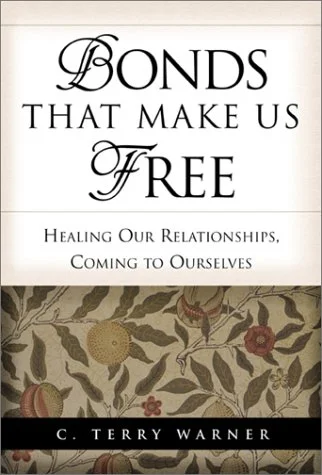
“Some things are only real because they represent what we think. When we learn the truth and think it, the old reality is no longer real to us and loses its hold on us. The truth sets us free.” -C. Terry Warner, Bonds That Make Us Free
When the syllabus for my Intro to Mediation class landed on my desk, I had to chuckle at the choice of text that was going to be guiding my studies. Inexplicably, as a 17 year old at the library with my family, I had picked up Crucial Conversations and later, after such a natural page-turner for a teenager, its sequel, Crucial Confrontations. Now in college, I was to read it again and put it to use in mediation training.
This happened a few times throughout the course of learning the behavioral sciences, where the texts were books I had read in my late teens. I blame Oprah. Many an afternoon in my childhood was spent watching the show with my mom. Talk about tween gold mine, right? It was practically Twilight for the 90’s. Or at least I responded to it that way. Due to my growing interest in watching grown women talk about their weight and self-esteem issues, I devoured self-help and relationship books. I became my very own, self-proclaimed, relationship/self-help expert. Key word: self-proclaimed. In lieu of my own experiences, I observed other’s relationships, listened to what the doctors on TV had to say, and read a lot of books. As for me, I didn’t have a serious relationship until I was 22, and even then I’m using the term “serious” about as loosely as Fox News uses “Fair and Balanced”.
Before getting married, I told Jon there were a few of my favorite “love doctor” books I had always hoped my future spouse would read. We agreed to each read the other’s five favorite books. One he gave me is called Bonds that Make Us Free by C. Terry Warner. If you’ve heard of the Arbinger Institute or Leadership and Self-Deception, it’s all done by the same people with the same concepts. This one is just ultra in-depth and covers pretty much everything you ever need to know. It's not religion-based, but does align neatly with certain religious concepts if you choose to think of the ideas in that way.
This book did a few things for me:
1) Singlehandedly blew up my imagined status as a relationship expert
2) Frustrated me with its truthfulness; it’s the kind of true that sucks because you have to do something about it.
3) Made me very happy
Many times after reading a book I will proclaim it is the best, most life-changing book I’ve ever read, instantly leading an all-out campaign to get others to read it...for about a month or until I read a different book that trumps it. I felt that way about this book, but the difference? Six months and at least 15 books later, I still feel it. This book was different in that it actually made its way into my life in tangible ways- my mind, actions, and most importantly, my heart, are different.
It initiated a paradigm shift, impacting the very way I look at all things relationships. Other books teach methods and techniques. Behaviors to emulate, steps to follow. This book builds a foundation for relationships to be built upon so that the behaviors come naturally and intuitively without having to try so hard with a list of how-to’s.
The whole book is based on the premise that you can act however you want. But if your motives, feelings, or thoughts are angry, blaming, resentful, etc. then whoever we are interacting with at that moment will feel it. This isn’t energy healing or anything, it’s the idea that we can’t hide our true intentions. Somehow, whether in our face, the tone of our voice, body language, or word usage, we will reveal ourselves. And in so doing, usually the other person behaves in kind. Once they do, we then decide that they deserve whatever we are giving them because their behavior justifies it. Forget the part about how we started it in the first place. In short, it makes an excellent case for how nothing anyone does is ever an excuse to blame them for how we are feeling or behaving.
The author calls acting in a blaming or judging way “self-deception”. He gives many examples of how this looks in everyday life. One simple example is this: A man and woman are in bed, their baby is sleeping in the other room. The baby cries in the middle of the night. The man hears the baby first, the woman is still asleep. He thinks, “I should go get the baby and let my wife sleep. She does so much for our family.” But then, his fatigue takes over and he doesn’t go right away. Thus, in that moment, by turning from the little nudge to do the right thing, he has deceived himself.
As he continues to lie there, he begins to think things like, “Well, I have to get up early tomorrow and go to work. She doesn’t have to… plus, I have gotten up three times this week already.” This thought pattern continues until his wife, who has been in the exact same position, nothing has changed, now appears to him as a selfish, lazy, fake-sleeper who is trying to make his life more difficult. Thus now, even if he does get up to get the baby, he feels like he is doing the world a great favor. His wife should be so grateful to him.
What happened? Literally nothing had changed about the situation in the two minutes since he first heard the baby, other than the fact that he felt he should get up, but didn’t. His wife is still the woman he thought he should serve, as she “does so much for the family”. Yet, he has now become “in the box” of self-deception, unable to see the situation clearly.
In the morning, she doesn’t mention anything about him getting up. He feels angry toward her, even though he knows she really didn’t do anything wrong. When they talk at breakfast, he is a little short. She responds in kind, not knowing what his deal is. Because of her reaction, he is now able to feel validated in his assessment that she is selfish and doesn’t care about his efforts. She begins to feel the same way and act accordingly, and so the cycle of self-deception is set into motion.
The only way it will stop is if one of them chooses to see things clearly, take responsibility for their own actions, and begin to be kind. To decide that they will look at the situation from the other’s perspective, assume the best, and act appropriately in spite of the other person’s behavior. When done this way, the other person soon only has their own behavior to look at, and loses the chance to blame the other. Odds are that they will then begin to soften and understand that the problem is with them.
After reading Bonds That Make Us Free, the level of responsibility for my own life and feelings that I came away with was immense. It gave clear antidotes to destructive thought-patterns such as:
You see the theme: placing any blame on another person for how you are feeling, behaving, or living life, IS the problem. So often we think that another person is the problem, and if only they would change, our life would be perfect. I repeat: believing that another person is the problem, IS the problem. You can see why I said it's a little frustrating. Oftentimes blaming is so much easier than taking action yourself to improve the situation.
A quote from the book:
“Fable: When we're stuck in troubled feelings we believe that all our feelings are true-- that is to say, we believe that by our emotions at that moment we are making accurate judgments about what's happening. If I'm angry with you, I'm certain that you are making me angry.
Fact: Though we truly have these feelings, they are not necessarily true feelings. More likely I'm angry because I'm misusing you, not because you are misusing me.”
Any, and I mean any, issue we are struggling with in conjunction with another person is within our power to solve. Let me be clear: it is not within our power to stop them from doing whatever they are doing. They could be acting really poorly. But it is always within our power to get out of victim mode and be in control of our own happiness and contentment with life. This doesn’t necessarily mean we should stay in a bad situation, or continually welcome destructive people into our lives. It simply means that if I say another person is responsible for my life in any fashion, I am in the wrong and the problem is with me, not the other person.
Some will say that there are times when they truly are the victim. Heinous crimes against them, brutality toward someone they love, child abuse, etc. In those cases, a victim is absolutely the victim and is not to blame for what happened to them. However, it does not mean that the person who was victimized must have a victim mentality the rest of their life. Giving things from the past, or other people’s bad behavior the power to cause us to live a less-than life, is choosing to live a life of self-deception.
The book explains the problem so much more eloquently and completely than I just did. It makes it so easy to see where you have walked down the path of self-deception in all areas of life. Even having the thought, “So-and-so needs to read this book! That would solve everything in our relationship!” is itself self-deception. I love it because it gives the reader all the power. Everything we need to do to improve our relationships and life is within our power. Not easy, but it’s there.
The solutions in this book aren’t in self-help-how-to mode. They are large concepts that have to be carefully customized to each individual’s life. However, I have seen amazing progress in my life and the lives of others who have adopted the concepts. It’s a life-long pursuit, as is everything to do with more perfectly loving others and ourselves. It is worth it!